When a novel becomes a film we all get front row seats on a trek into the familiar. As promised, it’s a lovely shady whodunit – every passenger a suspect, every side-glance a confession of guilt. Star-studded, humorous, curious, mysterious, we step onto the train platform with the famous detective Hercule Poirot in order to solve a crime and a murder. The old tale and BBC favorite has been masterfully reimagined by Kenneth Branagh, both director and main character.From point A to point B, this dangerous journey is thwarted with clues and interviews captured from every creative camera angle. Bright colors glint over the snowy landscape as crisply cast characters reveal nothing until the dastardly finale. It’s a brilliant film, beautifully created and worth seeing.
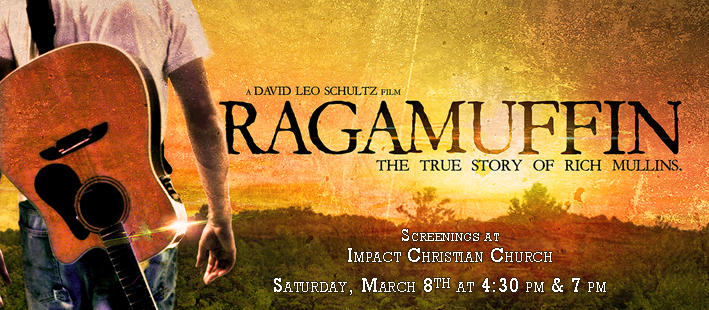
Who would play you in the movie of your life? The old campfire question suits when Sandra Bullock plays the benevolent mother to an unloved high school football player or when Judi Dench relives the journey of one Philomena seeking a lost son. But who will bravely take on the story of an alcoholic Christian recording artist who dies tragically in a car accident? Too much? Too messy? Too uncomfortable? Too many people continue to snub the Ragamuffin’s message…that we are all broken but that God still loves us.
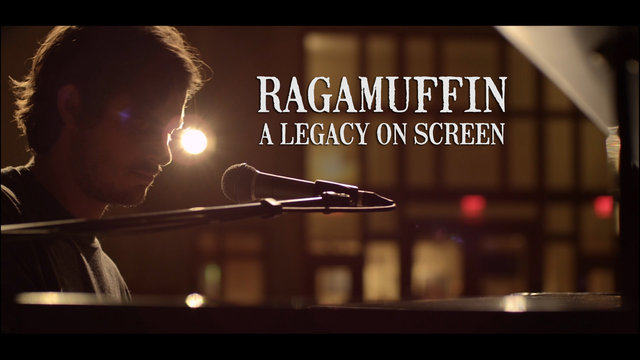
I loved so much about this film, produced by the Mullins family and directed by a friend: David Leo Schultz. I loved the almost documentary feel intertwining real recordings of Rich Mullins telling his own story and playing live performances on stages across America. I loved the casting. Michael Koch owned the role of Mullins whole-heartedly. And my friend Amy Schultz debuted beautifully as Amy Grant.
I especially loved the truth in it. It’s not fluffy or cheesy or kitsch. It’s honest. And, I believe that it honors the hero of the film, but Jesus most of all.
I remember when Rich Mullins died. I remember singing his songs in church. He was a kind of praise song pioneer. I remember the judgmental looks he got for his unkempt, rowdy, boisterous, rebellious Christianity in his ripped jeans and bare feet. Most people who complain about the church or about Christianity will blame hypocrisy. Perfection is unattainable, and churches are made up of imperfect people. It’s easy to forget, but forgiveness and acceptance is a simple ask away. Rich Mullins knew this. He spoke directly to the church about being real with themselves and others so people would know that Jesus came to save sinners, not just the people trying to look perfect. Mullins was refreshing. He struggled, and everybody knew it. Something in his swagger, his stammer, his unabashed truth telling, and especially in his honest music has shaped me and given me hope to help me through my own set of problems by relying on the giver of peace.
Here are the lyrics to one of his songs that has carried me on multiple occasions: “Hold Me Jesus.”
Well, sometimes my life just don’t make sense at all When the mountains look so big And my faith just seems so small So hold me Jesus, ’cause I’m shaking like a leaf You have been King of my glory Won’t You be my Prince of Peace
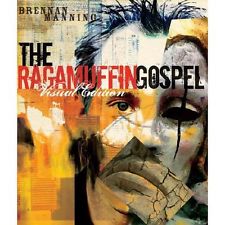
Was Mullins the modern St Francis, the original hipster of sorts who refused to play by the imposed rules of Christian society? He certainly swam upstream in a current of Christian conformists in the 90’s. Rich Mullins allowed his stage to become a pulpit to draw the hearts of Christians back to Jesus and away from stuffy ritual and performance faith. The Gandalf of this film is Brennan Manning, author of a beautiful book called “Ragamuffin Gospel.” Rich Mullins wrote the forward about honesty and frailty and how this concept of being a Ragamuffin had shaped and truly changed his life.
Be careful going in to this film…you might just end up confronting your own demons and find out that you are indeed a Ragamuffin like the rest of us. The daddy issues may resonate in your own heart. You may feel conviction, but more so the discomfort of God’s acceptance despite your imperfections. Watch out; you might just meet Jesus.
The DVD called Ragamuffin will be available on May 6.
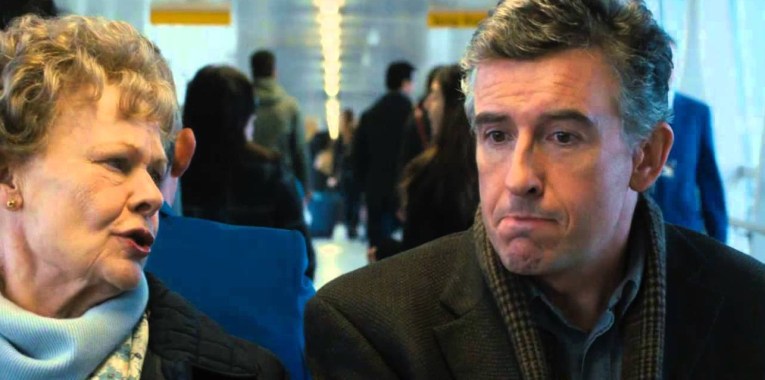
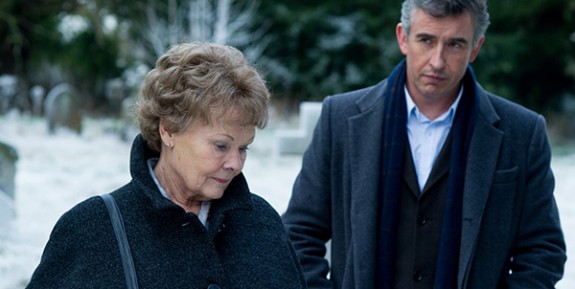
In Philomena, the character arc is slight and unexpected. The title role, played gently and subtlely by the delightful Judi Dench, went from following blind faith to allowing bits of doubt to formulate questions that would eventually offer escape from her prison of fatalism. Her purposeful belief finally leads her to peace and the unexpected: true forgiveness.
Character arcs. I’ve discussed the pivotal nature of arc in story before. Think of a static character in terms his or her immutability or immunity to change. Static is the Matrix pre- red pill. I have learned that in order for a character to remain static they must never face conflict or at least refuse to learn from pain. The static character is either boring or external to the movement of the story.
When characters choose the change, they move from static to dynamic. They often get new names and see the world as broad and wide and find purpose despite challenge. They are interesting.In my recent viewing of August: Osage County, I left livid at every character for choosing in favor of cyclical, hateful, hopeless and in essence: static. Each could have deferred, rather, to hopeful and loving, inspired by discouragement to stop wallowing and to change. A recent discussion with someone who loved the film said she was given hope for Julia Roberts’ character when she chose to drive away. She faced the rising sun and stepped into life. Perhaps some arches are slight, but no less purposeful.
Philomena’s journey felt Herculean. She seeks to be known and remembered and therefore made whole. Her sacrifice feels worthwhile only if accepted by the one person it was meant for, her child.
The journalist’s arc is slighter still. Martin Sixsmith, played so well by Steve Coogan. The story goes, that he, the Muggerich to her Mother Teresa, must take Philomena on a journey, from which she must be given grace to move on and he must grow a heart.
It’s difficult to pin a Grinch face on one so polite and likable. His journey begins with a selfish attempt to reignite a lost career, but becomes a jolt for justice and eventually a friendship. At first he is as emotionally disconnected as the audience in the theater, but as tension builds and Philomena grows fonder, we race in with him through barred doors eager for the truth, angry at the revelation of it.
Some cruelty is inexplicable. We cannot forget of what we are all capable or the fact that without grace we too could fall prey to temptation. Philomena forgives not by fate, but in faith. For this arc, she will be remembered.


 Star-studded, humorous, curious, mysterious, we step onto the train platform with the famous detective Hercule Poirot in order to solve a crime and a murder. The old tale and BBC favorite has been masterfully reimagined by Kenneth Branagh, both director and main character.
 From point A to point B, this dangerous journey is thwarted with clues and interviews captured from every creative camera angle. Bright colors glint over the snowy landscape as crisply cast characters reveal nothing until the dastardly finale. It’s a brilliant film, beautifully created and worth seeing.





 Splatter: on FILM