WATER FOR ELEPHANTS (2011)


I’m reminded of an interview I once saw with Tom Hanks who for some reason was talking about his favorite Elvis movie called “Roustabout.” In his very Tom Hanks style he quoted both Elvis and Barbara Stanwick, first uttering like the guttural girl, “This is not a circus, it’s a carnival and don’t you forget it!” Then lifting the corner of his upper lip, “So a uh, a carnival has like a ferris wheel and a circus has, like elephants?” Well, I’d love to have seen this circus flick with Mr. Hanks, even though the actors would be less mimicable. Robert Pattinson, ironically called Jacob in this film, actually acts. He reacts as only a hero could – for the right despite the consequences. His performance reminded me of Keanu Reeves in his true chick flick A Walk in the Clouds. Not terribly dimensional, but likeable and kindred. Reese Witherspoon hasn’t aged. I read once that she insists on sleeping 10 to 12 hours per night, and that it’s her secret to success and happiness, and youth, and physical beauty. Nah. Really? Nah.
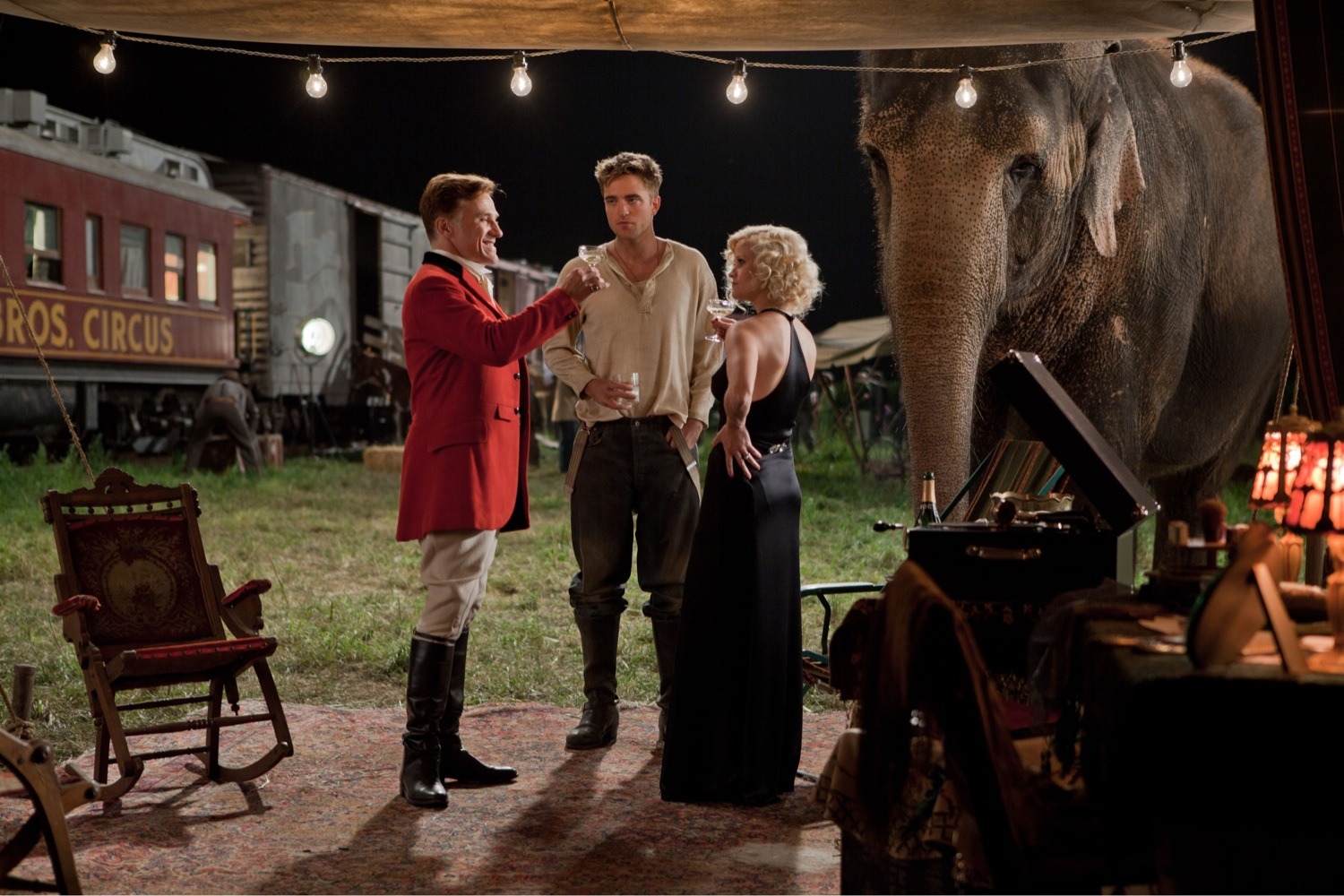
This is a movie movie, for entertainment alone. No hidden symbolism. Just straightforward plot moved by characters on a train who hate then love each other, who learn from one another, and who fight to survive despite the ringleader’s cruelty. Triumphs and tragedies, loyalties and love affairs, the inner ring of circus life.

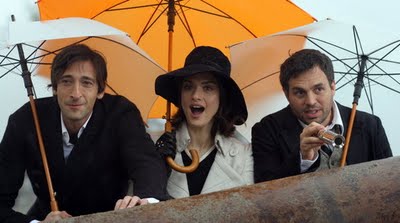
THE BROTHERS BLOOM

Weiss. Weiss is quirky and unforgettable as the epileptic photographer.
Brody plays the perfect brooding brother.
Ruffalo, the wild, true con artist.
All is well with the Brothers Bloom, all except their lives. Bloom, after playing scripted characters for his brother’s approval and the family survival for as long as he can remember, now longs for an unwritten life. Steven Bloom plans and plays it all out professionally – a flawless performance as the paralleling Icharus character. Bloom agrees to play one last character and meets the most “real” girl he’s ever met.
I’m still pondering whether Weiss’s character is created or simply lived. A girl called “Bang Bang” also adds quirk and intrique. This film is a must-watch. It must be watched at least a few times. The details are brilliant. Please beware the silly scenes, the few unnecessary phrases. Do recognize the artwork, the scenery, the poetry. Dwell in the moments delivered to you via Rian Johnson’s Directorial masterwork.

WHERE THE WILD THINGS ARE

Adventures with Max are phenomenal, well-written, well-played, well-dreamed, and well-filmed. Ordinarily, book-to-film adaptations lack depth and intrigue. This film, having no more than 10 pages to work with, however surpassed my every reading of this book before. Little Max gave an astounding performance. I could feel his pain, understand his loneliness, sense his sorrow, and at the same time, he made me more resilient with his every battle cry!
Henson’s monsters ala Sendak spoke candidly, played violently, felt intensely. Each highlighting and honing in on an aspect of the boy’s internal sensibility, became a kalidescope of kid-sized reactions and thoughts. The new “family” made him their king and asked if he in his power could take away the sadness and loneliness. His response became the backbone of the film, “I have a sadness shield and I take loneliness and do this…kapkooo!” King Max grew up over his short season as king of the Wild Things, learning how to deal with his inner termoil and how to love his family again. Saying goodbye, Max sailed back across the sea to the perfect sound track by Karen O and the Kids.
So, let the wild rumpus begin!

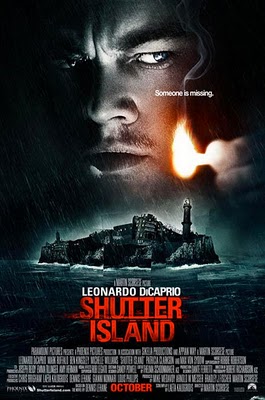
SHUTTER ISLAND

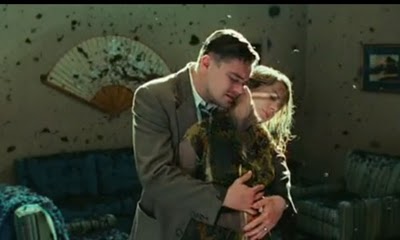
Scorsese, the scar-faced Santa Claus, delivers coal to sinful souls through a wet, red door in this film. Justice and mercy, forgiveness and grief – these intermingle as Leo fights demons and seeks truth. In finding it, however, he also finds himself in interminable pain. This journey is a powerfully concocted trudge through the tortured mind, and ironically it’s a thinker film without a lot of action. Are we meant to see ourselves in one of the two pairs of shoes – as potential patients? Are war “heroes” made at the price of, how did Leo put it in the film…something like, “our God-given moral code?” Motifs flourish in this film: water & death, fire & life, light & escape. Most of the elements are present, but Scorsese’s most impressive elements are the cast members themselves. Each performs perfectly in his / her roles. I love this cast. Each one would make my list of “people I would have lunch with…living, dead, fictitious…” Ben Kingsley is lovely as always – a father/mentor figure. Mark Ruffalo has the role of “foil” down pat, and he such a handle on de-emotionalizing and controlling his characters. I feel safe in his performances – curious, but safe. A favorite and most telling scene is the conversation between Leo and Ted Levine (Monk’s Captain Stottlemeyer). And I’ve come to expect seeing Christopher Plummer lately, so of course he was the man in the chair. Leo is stunning. He is dangerous and unapproachable as a human being, a perfect match to the foil. He is the hero. I love his purpose and his approach to the journey – he fears not for himself – a heroic earmark.I am a Gretel. I love following bread crumbs. (Beware: light spoilers to follow.) It opens with a Hitchcockesque score, which doesn’t continue, but bursts forth once again at the very end. I was surprised to hear the conflict indicator line “A storm’s coming” in the first five minutes of the film. Crumbs: Ruffalo’s gun, accent, and sideways glances; the guards’ boredom, the supposedly-menacing lighthouse (usually a beacon of safety), the darkly humorous interviews. It’s not a question of what is real, but what is actually unsafe? Scorsese sets the audience up well and moves the story at a digestible pace, but shows me too much gore to ever want to see it again. Yes, Scorsese indulges in a violent commentary on life, but at the expense of all comfort. What initially advertises as beautiful is frightfully bloody and heart-woundingly sad.

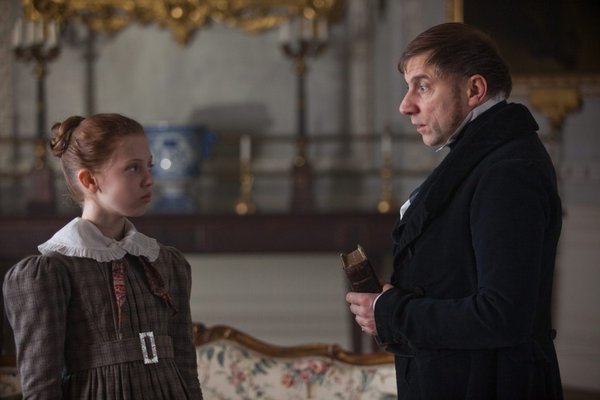
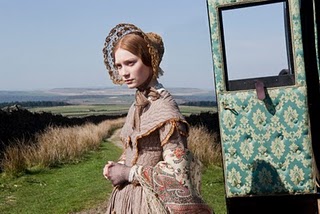
JANE EYRE (2011)


Charlotte Bronte created the beloved, young heroine in 1847, simply but affectionately calling her Jane Eyre.

ABUSE or Training?
Poor, mistreated, forgotten, unloved, Jane Eyre. Battered by her only family as a child, then more so as a girl at the Lowood School, her only friend dies by her side, leaving Jane alone again. In truth, I can’t seem to read past the scenes in which Helen dies. I’ve tried. I am broken by her death, by the death of an only friend. Once loved, but again forgotten, Jane Eyre grows unbecomingly, leaving the school as a young woman to become a governess in the home of a Mr. Rochester. Jane seems to move from abuse to abuse, from ignorance to neglect, then back to abuse. She longs for independence and love, but finds none.

Story. Plot. Characters. CHECK. Dark. Brooding. Desperate. CHECK.

ABANDON or Consent?
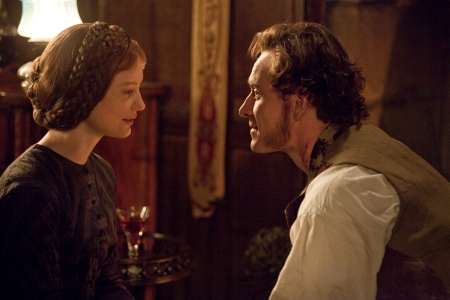
Only one takes notice. Rochester sees through her, it seems. She shutters at his gaze. But I’m not certain that his notice is at all good for her. I’m saying it now: I’m not a Rochester fan. Yes, I’ll admit that I loved watching William Hurt vulnerably admit love to a much younger Charlotte Gainsbourg under the artful direction of Franco Zeffirelli (1996). But today, as Michael Fassbender eerily enveloped Mia Wasikowska, I felt like I was taking an “Issues of Abuse” class. Mia certainly proves a lovely Jane. She is likable and otherworldly, just as a Jane should be. Rochester plays his part beautifully, but I’m left wishing I could send Jane a ticket to London to get her out of the moors and into a place with more fish in the sea. Oh, Jane. Tragic.

JUSTICE or Cruel Fate?
Together, at last, as equals. She: now rich, handsome, fulfilled, but lonely still seeks him out. He: now lowly, lost, poor, maimed, blinded, but freed from his prior responsibilities may marry. They are finally equals. Right? Then why the knots in my stomach?

I’m not saying that a happy ending is a must. But hope is. If I’m left with the only hope that a young, thoughtful, accomplished girl can finally be in love with a staunch, deceitful, abusive man, I remain hopeless, feckless, daunted.

Oh, Jane. Poor, poor Jane Eyre. And poor me. And poor Annie. And poor Claire for having slipped away for distraction only to be dragged by the perfunctory Victorian bonnets across the lonely moors of Britain. At least, as it was so aptly put afterward, it was “like, a gothic piece, with, like no Edwards or, like, Jacobs to worry about.” Yes, at least that.

EAT, PRAY, LOVE

This could have been called Walk, Sit, Smile. As our hero rushed out of her ordinary world, she became a traveler, a thinker, a mimic, a devout even thoughtful character. I cried through this whole movie. I kept wondering why as I walked away from the theater and down toward the waterfront to catch the last bits of sunset. What had I learned from this film? Certainly, my lessons are not the same, but I feel for her as she experiences pain . I ache for the lost, the compassless, the grieving. This film opened a stranger’s medicine cabinet, and allowed viewers ample opportunities to recognize that the perscriptions have our names inscribed on them. We feel for Julia. In many ways, as any good story should, we feel we are not simply like the hero, but that we are the hero. My story may not take me around the world, but the obstacles, the triumphs, the discoveries, the journey itself : these are the same. My compass, however, is the Jesus and His word. Without it, I too would likely find myself on a similarly blunderous journey listening to all voices longing for the one that sounds most like a father.
(Originally published at http://splattersfilmblog.blogspot.com/)

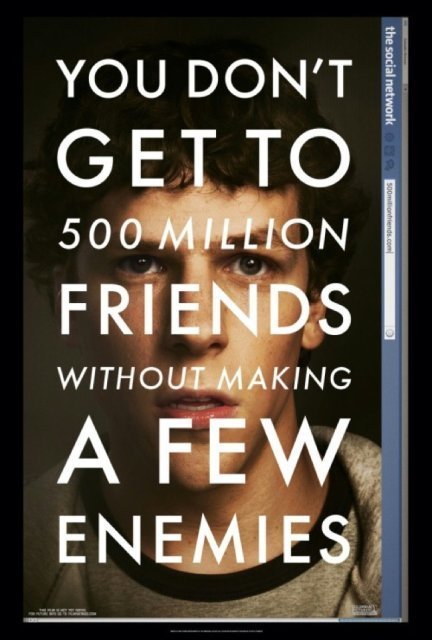
THE SOCIAL NETWORK


Smart. You know what I mean when I say smart. Witty, fast dialogue. Not the comical Gilmore-style, but honest, genius material. The writing matched the Zuckerberg character in true autobiographical fashion. Known, but a mystery. Our protagonist’s character is in question until the very end when Rashida Jones demystifies and encourages the hero. His foil, the likable front man, beside and against him the whole time, was perhaps my favorite character. Two scenes made the film for me: the entire opening sequence from argument through the tension-framing scored opening credits, and the race on the Thames – voiceless yet as elegant as a ballet and as telling as a novel.

The journey of Facebook, only just begun, is happening as we speak. It’s the equivalent of a modern day Neverending Story. Now Bastion’s story is online and we can click a quick change of status and then friend him. Just like that.

WALL STREET Money Never Sleeps

When I was in 5th grade, Lee Dumas, obviously a candidate for stronger & smarter than the average 5th grader, had already hit some sort of pubescent phase and had registered an all time low in vocal tones. But being bigger and louder, and redheaded to boot, only encouraged him to talk gleefully and incessantly. Talking got him in trouble, and in trouble meant missing a much needed recess. My mom used to say, “I think he’s misunderstood. His voice is lower and it carries. I like him.” “I like that Lee Dumas,” she’d repeat. I liked him too. So often I wondered what would become of him. I heard that he went to work on Wall Street – that he’d put that carrying voice to work.
Carrying voices or not, we all want to be heard, to be noticed. We all seek after dreams and success in some way or another. Stanislavski (famed for creating his now commonly used acting methods) called  this the “golden key,” a questioning in which actors ascertain what a character wants and therefore what moves them forward. This movie, directed by Oliver Stone, shows tragic individuals vying and gambling in view of their own golden keys. All gifted in business, but out for self…”for number one,” as they say.
Before we attempt to scrape the speck from Shia LeBouf’s eye, let’s consider his performance the most endearing and his ability to cry on cue confirmed. Wow – such waterworks.
The writing works, the cast is incredible, the filming meaningful, but the visual motifs are heavy-laden. The bubble metaphor waxes pretentious, not eye-opening. The characters we are meant to cry for and over (not to mention WITH) are not loveable -or even really likable. I wish that Stone had spent more time developing these characters and less panning over jewels, wine glasses, and skylines. Carrie Mulligan’s tormented daughter routine, for instance, sadly shows only one dimension as every close-up face shot portrays the one desire for a present father figure. She wanted this as a little girl and she wants it now. And the Father? THE Michael Douglas plays too wicked a Faustus to buy back his soul in the end. Brolin deals in and out, proving the formidable player of the big game. Perhaps, in the end, we are all a lot like that kid, Lee Dumas, fighting for attention and hoping to be noticed for our strengths and dreams as much as our weaknesses.
Unfortunately, this film drags and ebbs proving again the tide of the self-seeking and money-driven to be none other than LONELY. Shocker.

ADJUSTMENT BUREAU (2011)


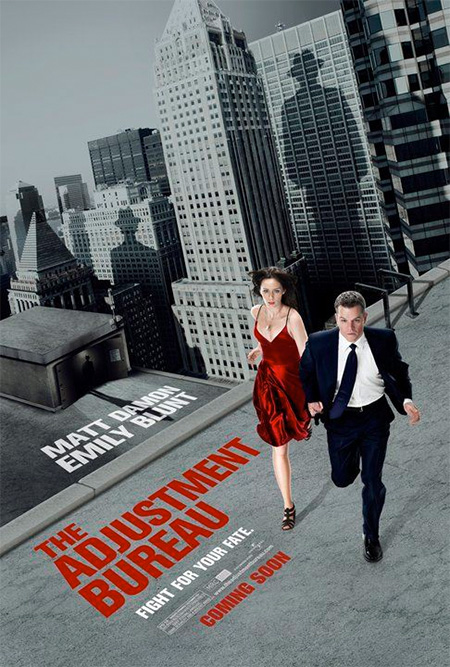
Church and state rise to a whole new level in the newest Matt Damon offering. But is it heaven? Turn the knob in the other direction and the door opens to lies, voyeurism, angels in Mob suits and fedoras who carry out the “plans” of the Chairman/woman. This film ventures into the classic debate: free will vs. puppeteering. The argument becomes most problematic when we assume that it’s God’s plan that only supports certain power-wielding individuals in their quests to become famous. “Leave with her and she loses her dreams of becoming the most famous choreographer in America and becomes a dance teacher for 6 year olds.” Loathsome profession, eh? Shame on them. So, LOVE proves to be the only alternate and inescapable plan-changing force that can get in the way and undermine the plan while gaining the respect of the so-called “Chairman,” played by BBC’s own Jennifer Ehle (Pride & Prejudice 1995). Arguable theology, yes, but captivating stuff which memorable film plots are made of? No.

Matt in his opening sequence is brilliant and oh-so loveable as the “honest” politician. Lost you yet? His scene with Emily Blunt stops time. Then we wait. We wait and we wait for movement, for color, for fun, for a kick that wakes us up from this, another in the Matrices of attempted fate talk. We wanted him to see through “them” in the end, but they weakly let us have what we think we want at the end. The film feels forced far too often. I loved certain scenes, but unfortunately the idea that “true love conquers all”…even the subversive plans of a Zeus-esque diety don’t hold water. Speaking of water… In this film could water mean Chaos? Freedom? Free will? The fluidity of choice within the concrete structured grid lines of governmental, forced compliance? Perhaps. Stop running, Matt. Just stop.
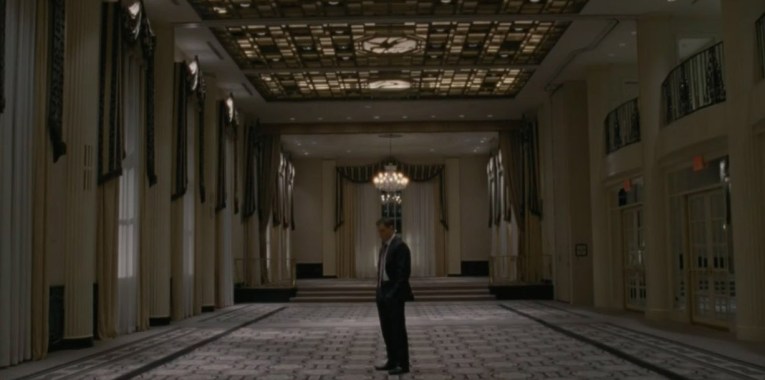
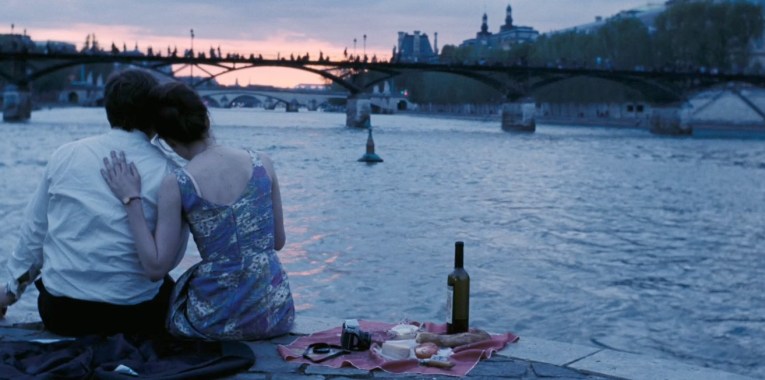
(Ironically, the picture below contained two film titles cut together into one shot. An accident?  …C’mon.)

AN EDUCATION (2009)


“The effect of education, I suppose,” quoth Fanny Price as she relayed tales of Mansfield with an air of guilt over the scandalous nature of her gossip. Fanny learns lessons as she lives juxtaposed to the rest of the family. She is intelligent, witty, diligent, and strong of heart but born out of privilege.

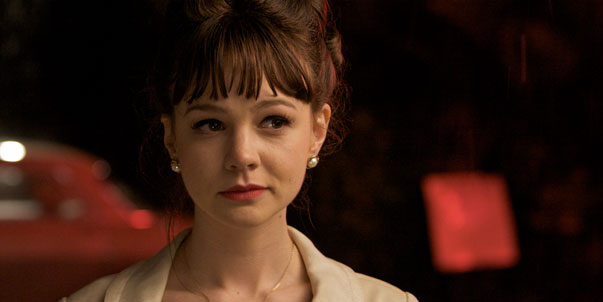
In this tragic film, starring the lovely Carrie Mulligan, we see a young girl living a bit as I believe Fanny would have if she’d lived in the 60’s. She’s intelligent, a fighter, with whimsy and a sudden doorway into the privileged life of the playboys of London. They rob from the rich to feed themselves. They rob from the young to feed their lusts. He is no Robin Hood. And she, strong spirited and mature for her age, must learn the lessons which her parents are unable or unwilling to teach: honor, dignity, wisdom, responsibility, integrity, and morality. I am sad for her. I weep for the immoral masses without mentors. I am determined all the more to teach these principles as an educator, all the while knowing that I can only go so far. I felt oddly kindred with Emma Thompson’s character to a point, but grateful in the end for the other teacher, Miss Stubbs. Tragic name, but hopeful character on a journey of her own. All she lacked was joy in conviction. The two can coincide. Unfortunately, this film did not allow for that.
“Let other pens dwell on guilt and misery. I quit such odious subjects as soon as I can, impatient to restore everybody, not greatly in fault themselves, to tolerable comfort, and to have done with all the rest.” ~ Jane Austen’s Mansfield Park, chapter 48