How could they have known they were sending a crippled man to the moon? Emotionally broken, tripped up over and over, Neil Armstrong’s journey into space was fraught with death. He knew the risks but pushed on. We know that there are many ways to grieve, so many faces, steps, phases. Each day a smaller crescent shows until the grief washes over and you are full once more.
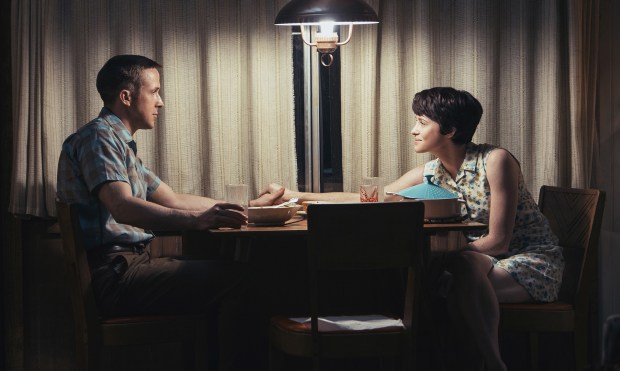
Director Damien Chazelle’s newest dazzler wasn’t what I expected at all. It’s pensive, somber. It doesn’t have the heat or pace or pressure of Whiplash. It’s not fueled with color or pizzazz like LaLa Land. Rather, this feels more Malick-esque. Somber tone throughout, it steps softly into each phase of the story. The tension sits on brows, in close proximity always leaning forward, waiting.
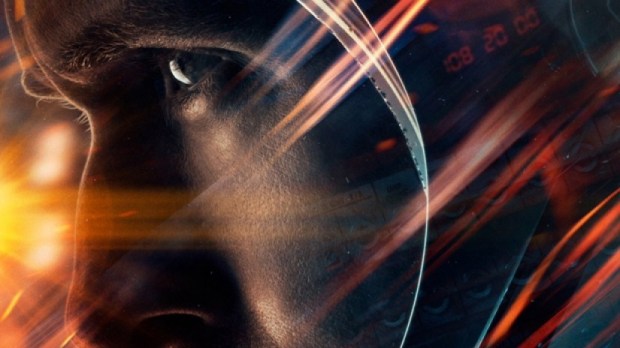
So much is shot in POV, allowing viewers an experiential almost widescreen VR approach. No doubt the Executive Producer, Spielberg, had a hand in that. We feel the Eagle’s Landing and step onto the lunar soil ourselves, then we glimpse the long horizon and slice of earth through the visor.Gosling’s Neil Armstrong is perfectly poised and tenuous. He is calm and calculated, exacting and still. His silence screams his character’s pain and grief.
His counterpart Claire Foy holds the audience in the same spin as well. Her eyes echo the stories of loss without words, pain so deeply felt it changes you, drowning out all but the one focus. For the Armstrong family, loss bolstered drive that became history-making.
From his sweet fathering moments holding his kids, playing, laughing, to the ever-present near-death scenarios involved in space travel, Gosling holds our gaze with his. “I see the moon and the moon sees me. …Shine on the one I love.”
Tag: Ryan Gosling
BLADE RUNNER 2049 (2017) movie review
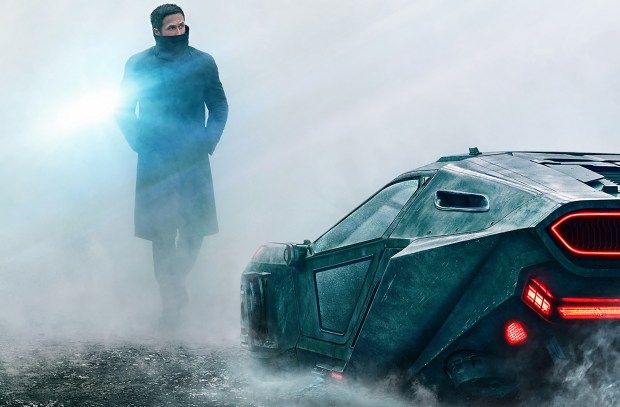
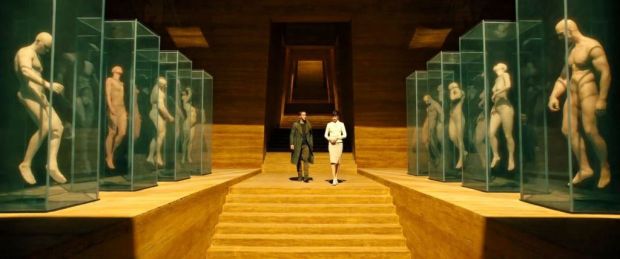
Executive produced by the original director Ridley Scott, directed by Denis Villeneuve of last year’s hit Arrival, and written by the same screenwriter as the original, the new Blade Runner 2049 lives in the exact universe of the first film, 30 years in that future.
A simple premise for those who haven’t seen the first movie: Blade Runners are hired hitmen detectives working with the police to annihilate rogue AI. The culture and ethic of the Blade Running game is called into question when it becomes personal.
The Blade Runner stories are based on the novel by Philip K. Dick called “Do androids dream of electric sheep?”
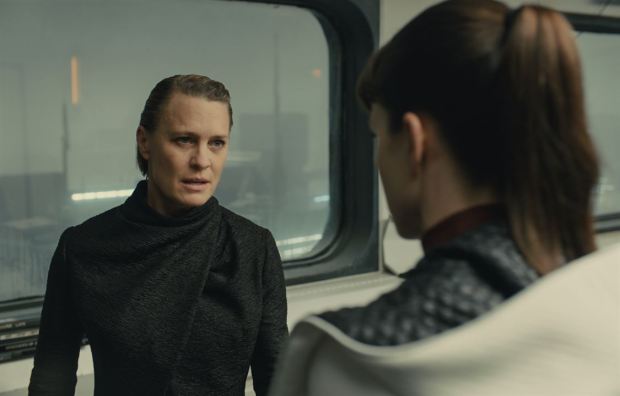
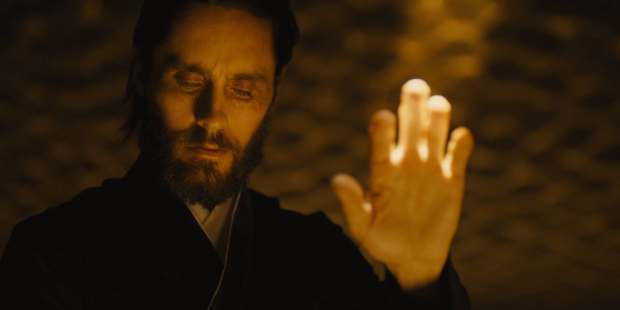
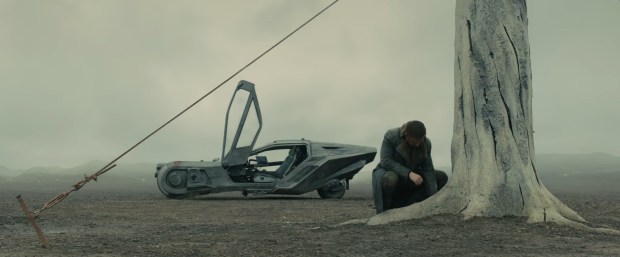
Ryan Gosling, Robin Wright, Jared Leto, and all of the other famous faces are perfectly cast in this follow-up film. I hesitate to call it a reboot, as it picks up the baton and runs at full pace as a stand-alone piece of work. Yet, if you missed the epic first, you will feel lost in the second. It’s all callback to the original, and a set of explanatory paragraphs on the first screen can never offer enough back story, enough power play between self-deifying creator and creation in these “replicant” stories, or enough of Harrison Ford’s character’s emotional connections to remind or prepare viewers fully for this visual bonanza.
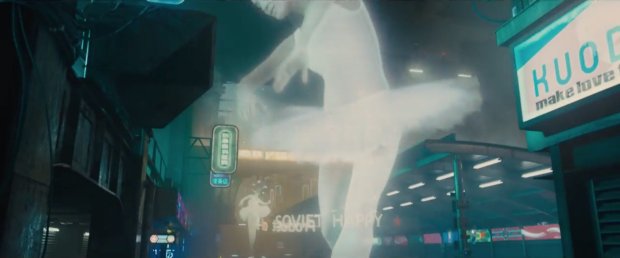
Both are art films. Futuristic, sci-fi, noir, almost neo-western, dramatic, art films. Unique. Slow pace builds in intensity to fierce action. The use of color and light, the silence then epic throwback music nodding to Vangelis’s original score, the heartbreaking potential future of relationships in a porn-addicted society that seeks fulfillment from devices before risking human contact. It could be seen as a sci-fi Her (2013).
Blade Runner 2049 shows extremes. As the once emotionless regain their senses, the brutal continue to ravage without conscience. Blood and nudity, death and sensuality. The director is careful to hide much of what would be considered gore or blatant pornography just out of sight, but it’s ever-present in this dark future world. Both films were hard to watch in moments for the same reasons. Neither glamorize murder or sex. Rather they make both absolutely dark in this miserable, unlovely, lonely, future world.
It’s hard to explain how these heavy films manage to show beauty, but somehow the emotions render as pure and honest, and the deserted radioactive wastelands of the films’ landscapes are simply breathtaking. The faces in the frame, often bloodstained, are flawless and offer so much insight with limited dialogue.
Perfect storytelling from the start, we care about all that our main character cares about. We want answers, just as he does. We follow the same twists and turns in plot, living his existence with him, together hoping for meaning, purpose, truth, justice, and life.
LA LA LAND (2016) movie review
City of stars, are you shinin’ just for me?
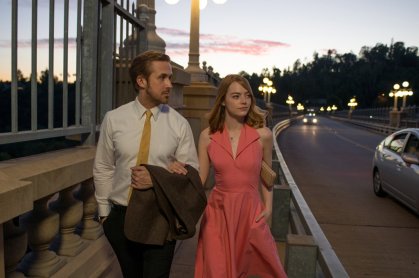
I grew up watching Fred Astaire and Ginger Rogers toe tap and twirl as the band played on. In La La Land, writer /director Damien Chazelle offers the same snap and dramatic vibrato expected after his Whiplash hit in 2014 without falling into the traps of most musical fare. This is whimsy, not kitsch. 
LA is not the city of love or light or laughter. It’s the city of stars, of expectations and broken dreams, of dress up and play act, of trial and error, of big show and grand finale. Who better to cast in this musical whirlwind romance than Ryan Gosling and Emma Stone.

Patched realism supersedes glossy perfectionism as La La offers common characters in challenging jobs and relationships who sing and swing their way through classic Rebel moments and old timey jazz bars. Barista Stone flies from one disappointing audition to the next while Gosling’s sappy Romeo throws himself into his purist jazz music. Balancing hopeful dreams and daunting realities in Broadway rhythm, they dance through every season as La La Land changes them both, for better or worse.
This necessary film somehow offers dreamers windows of practical insight while in the same beat, providing hope for fatalists. The score, perfectly understated, never preaches or screams. It lilts and never leaves you. It’s somehow about you, so you won’t forget it. And you’ll possibly wonder for much longer than a moment, why you ever stopped taking piano lessons.

THE NICE GUYS (2016) movie review
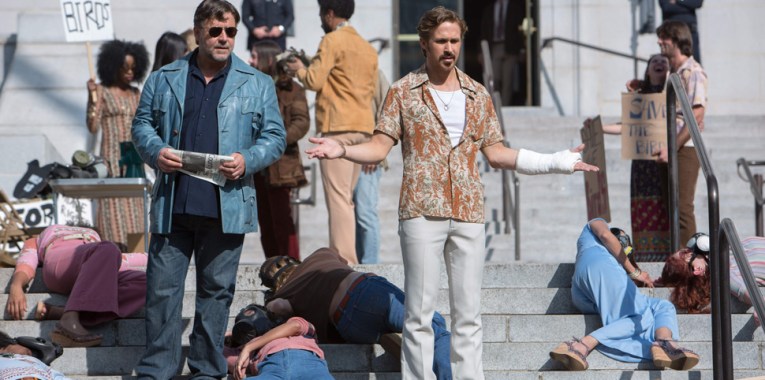
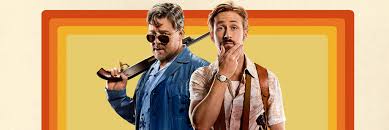
The two main talents pose this question as they seek redemption and purpose in 1970’s Hollywood.
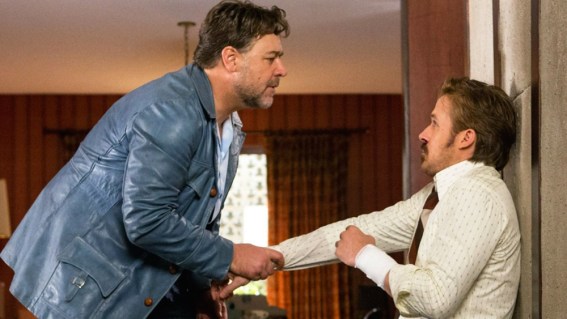
Russell Crowe, bedraggled muscle-for-hire becomes a crime fighter just long enough to get a taste for life as a good guy. He feels proud of himself and wants to do what is right, but it’s hard to shake old habits.
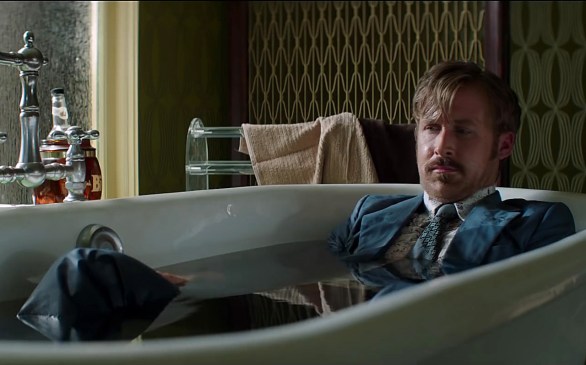
Ryan Gosling’s character, b-class private investigator with decent intuition but bad judgement ceases to impress his toughest critic: his preteen daughter.
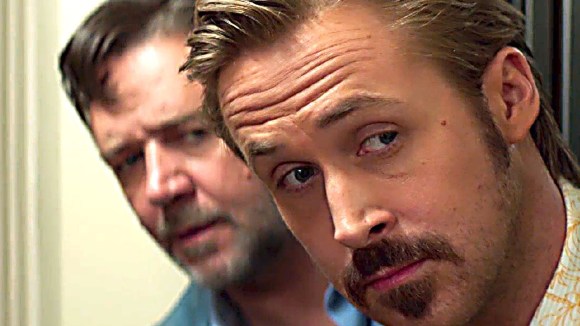
The precocious daughter, played by Angourie Rice, finds herself helping on a missing persons case that both men go after. They are too often the Oscar and Felix, bumbling around LA through strip clubs and parties trying to find the daughter of a politician who made a dirty movie. Her film, a central prop, turns out to be more than porn as it’s laced with political schemes and scandals. When all of the players associated with the film start dying, only our Laurel and Hardy will stay on the case.
This film is unfortunately anticlimactic, slow, and mind-numbingly profane. It forgets its first search for redemption and the original question “Am I a good person?” and settles into the pavement as the anti-heroes drive away to begin the search all over again. It’s a dead-end romp, so sadly The Nice Guys is anything but nice. 4/10.
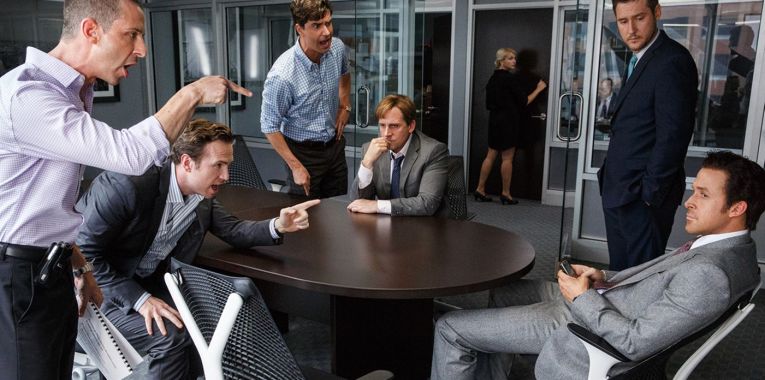
THE BIG SHORT (2016) movie review
This little big pic with a load of big names was nominated for a number of huge awards this year. I have to admit that this film won me over with its jolting flashes through ’02-’08 memorabilia and music and 4th-wall-breaking fast talking. A steady flow of truth serum on tap, it’s a game of sleuthing out the real bad guys. It’s the love of money preying on the weak-willed while families lose homes and livelihoods. Greed, abased and voracious, feeds on the basic human need for shelter in a market thought completely stable. Banks, originally the lending good guys, began playing Monopoly, gambling with real money, lending until the system imploded on itself. Only the fittest survived, and only the few, the smarter, the brave, the fighters saw what no one else would and bet against the house. They bet on the fringe probability that the future of finance had the dark potential they foresaw.
Based on the true story that few truly understand well, this film offers consistent sidebars with laymen’s tips for digesting the basic inside scoop of heady Wall Street jargon. They make it palpable using Jenga games that represent mortgage company strategies, fish soup comparisons, bubble bath exposition, and famous cameos throughout.
Actors like Bale, Pitt, Gosling, and Carell prove their chops yet again in caricatured roles like the rowdy anger management class drop out and savant mathematician, but each one is also given a level of personal story, history, loss, and heartbreak. We root for the gifted sad guy. Every time.
So, despite crass language and nudity, this is one incredible film. The brilliant script proves its worth every minute as dialogue rings true and exposition hides in plain sight below a universal and personal, visual story. Behind the truth, that in the end, being right and gaining obscene amounts of money can’t buy any of them what they really want: joy.
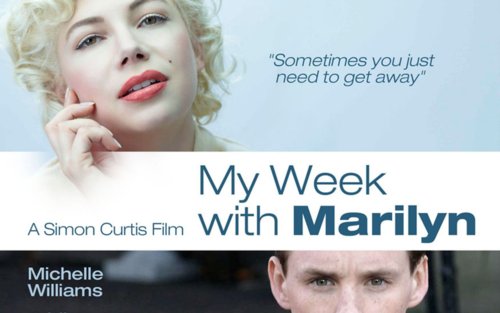
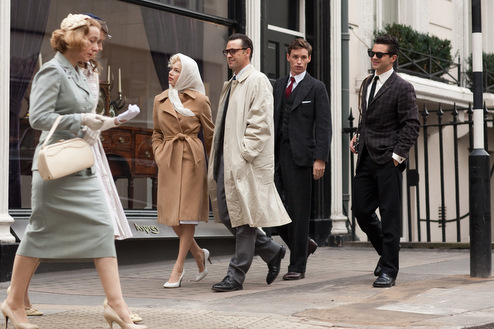
MY WEEK WITH MARILYN (2011) movie review
Marilyn Monroe
Gaudy. Mystical. She was an icon of whimsy and total sex appeal. All who saw her fell in love. In death, she immortalized. She will never age.
Her silver screen images will never prove mortality by promoting Depends ads. She will never gain weight and move to making Jenny Craig commercials, or have children and do that kiddie film just for them. She will ever be the bombshell blonde known for her curves and whispy vibrato.
In this glorious film tribute, illustrious cast on call, Michelle Williams leads the parade exuding the vulnerability of the gauzy star and allowing us to ask the questions. Was Marilyn capable of suicide? Was she the actress she hoped she’d be? Was it all a show, a game to her? Did she know exactly what she was doing? Was her real life as enchanting as she wanted us to believe? Or, did she absently originate the term ‘dumb blonde‘ by being herself?
This film raises another set of questions regarding the philosophy of classical acting versus method. Two schools of thought: I’ll call it Shakespeare Vs Stanislavsky. It’s no shock that Branaugh, known as the world’s favorite Shakespearean film lead, bests a brilliant Sir Lawrence Olivier -bucking the “method.” The whole historical grudge between these two has held in enmity over time. I believe Ryan Gosling to be an undeclared method actor. Michelle Williams is all too familiar with the man Heath Ledger who followed the method and died; many believe he died when he allowed himself to get too much into his character’s life, art, and back-story. Method actors search the resources of their minds to become their characters on and off screen in order to present the most realistic and believable performances possible. Believe it or not, Marilyn fancied herself a method actor. Ah ha! Herein lies the rub? No one claimed to know who Marilyn truly was. Couldn’t someone have saved her? I believe the journals of this film’s lead boy tell a brilliant story with no difinitive answers. But, we like suspense. Spend a week with Marilyn here and decide all for yourself.
PS. (Its “R” rating is akin to The King’s Speech (2010)…for language). Like Marilyn Monroe’s many films, the sensual tease in this film is ever apparent and acute but never acted upon. Visit Scarecrow Video in Seattle and rent one of Marilyn’s films. A few favorites include: How to Marry a Millionaire (1953), Gentlemen Prefer Blondes (1953), Monkey Business (1952), and River of No Return (1954).