THE BOURNE LEGACY (2012) movie review

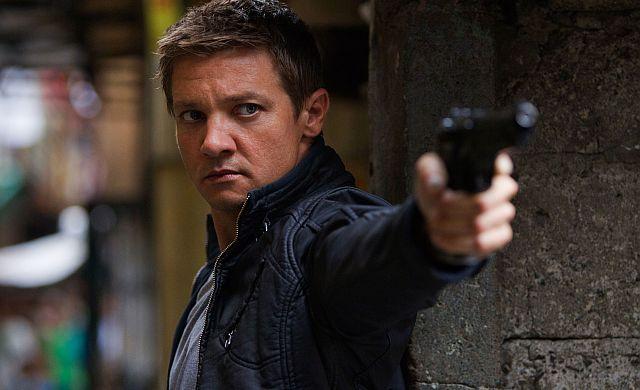
Matt Damon spent the trilogy discovering his mad new skills and putting them to good use protecting himself from assassins while piecing together the puzzle of his broken memory.


Jeremy Renner knows his story, perhaps too well. He’s haunted by the known. He knows his skills, how he got them, and potentially how to keep them. Therein lies his quest.

This film opens with the flattened puzzle sans one piece – Bourne. So audience members begin to feel smarter than the best brains in the film. Then before we know it, we’re sucked in again to a parallel story. We are driven by curiosity and respect for the guy who can sense what’s coming and know how to take out any assailant with bare hands and the random makeshift weapon. It makes you wonder if the dreamers behind this series watched a lot of MacGyver growing up.

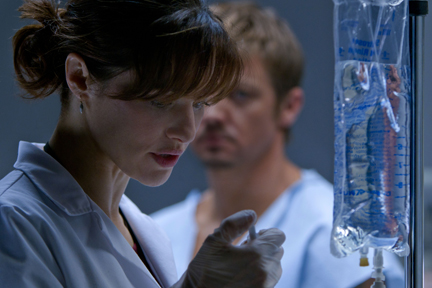
This film rides the rollercoaster of action sequences. Down time for Norton to strategize and yell at people. Renner running icy mountains. More Norton talk time. More Renner running, now in hotter climate. Add Weisz. Run. Talk. Run a ton. Out.

Bourne was never alone. The operations were endless. The interactions infinite. This is not the end of Bourne.

THE BEST EXOTIC MARIGOLD HOTEL (2012) movie review

“Someone once said, ‘It will all turn out alright in the end, so of it is not right, it is not yet the end.”

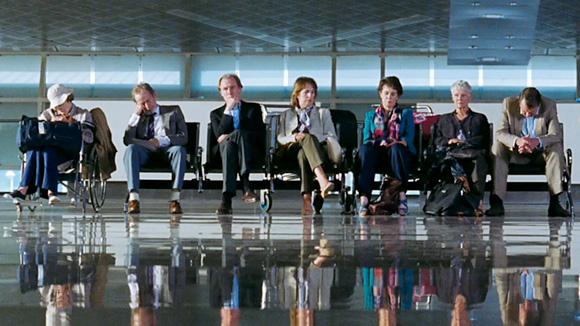
The casting is a delight from Dame Dench to Mr. Nighy. The scenery’s sublime yet honest. You will feel transported.
These guest are given honor from the moment they arrive, something they’ve sought and rarely found at home. Some take to the new setting, and some do not. Aging, though a theme, did not seem the center of the conflict. Finding love and contentment in whatever place and at whatever your stage in life did.

It’s a lovely few hours touring India with familiar british faces (especially if you are a fan of the BBC and of Downton Abbey, as I am). It’s unobtrusive. It’s not preachy. It’s not really a moral tale. Much of the humor is sexual and characters are not really out for redemption as much as a fresh start. At first it feels a bit Eat Pray Love-y in a less appealing setting, but it all grows on you as promised in the repeated line from the film,

“Someone once said, ‘It will all turn out alright in the end, so of it is not right, it is not yet the end.”

PEOPLE LIKE US (2012) movie review

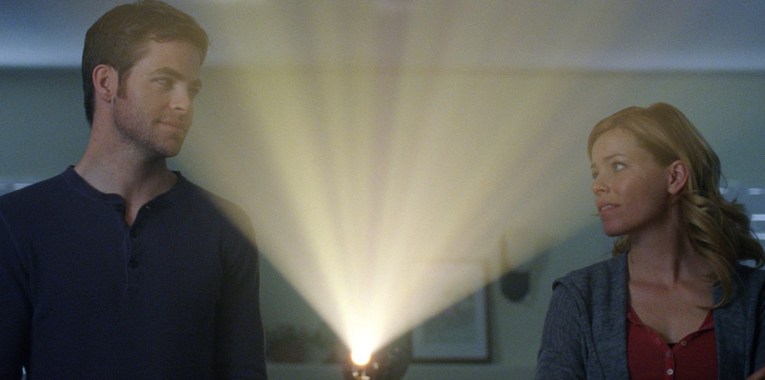
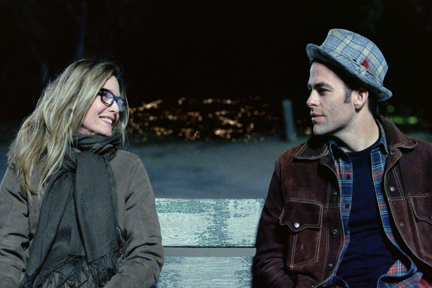
People like Chris Pine made this film look good. Timing is his strong suit.

People like Michelle Pfeiffer have obviously not aged with joy. And people like Olivia Wilde struggle to look dowdy enough to play the bit-part girlfriend.

People Like Us is not a comedy. It’s a tragedy. Lack of plot leaves characters fishing through raucous emotions to offer terrible advice to the next generation, setting him up to live a plotless life fishing through the same raucous emotions…in other words, nothing happens.

Tough to rely on even decent actors for an eventless film with only one honest scene (park bench at night) and a few cool looking Aronofsky-esqe shots.

Charlie Chaplin’s THE KID (1921) movie review

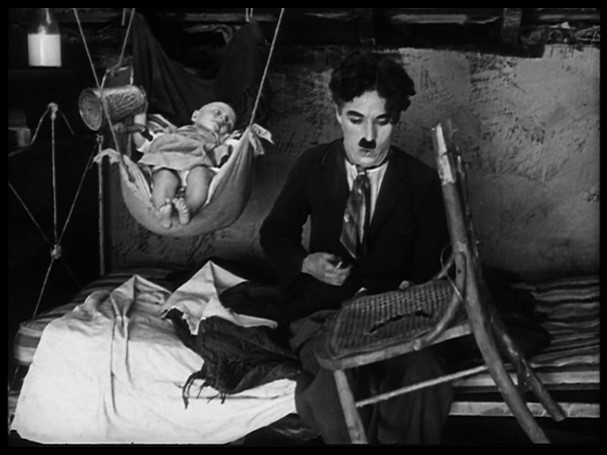
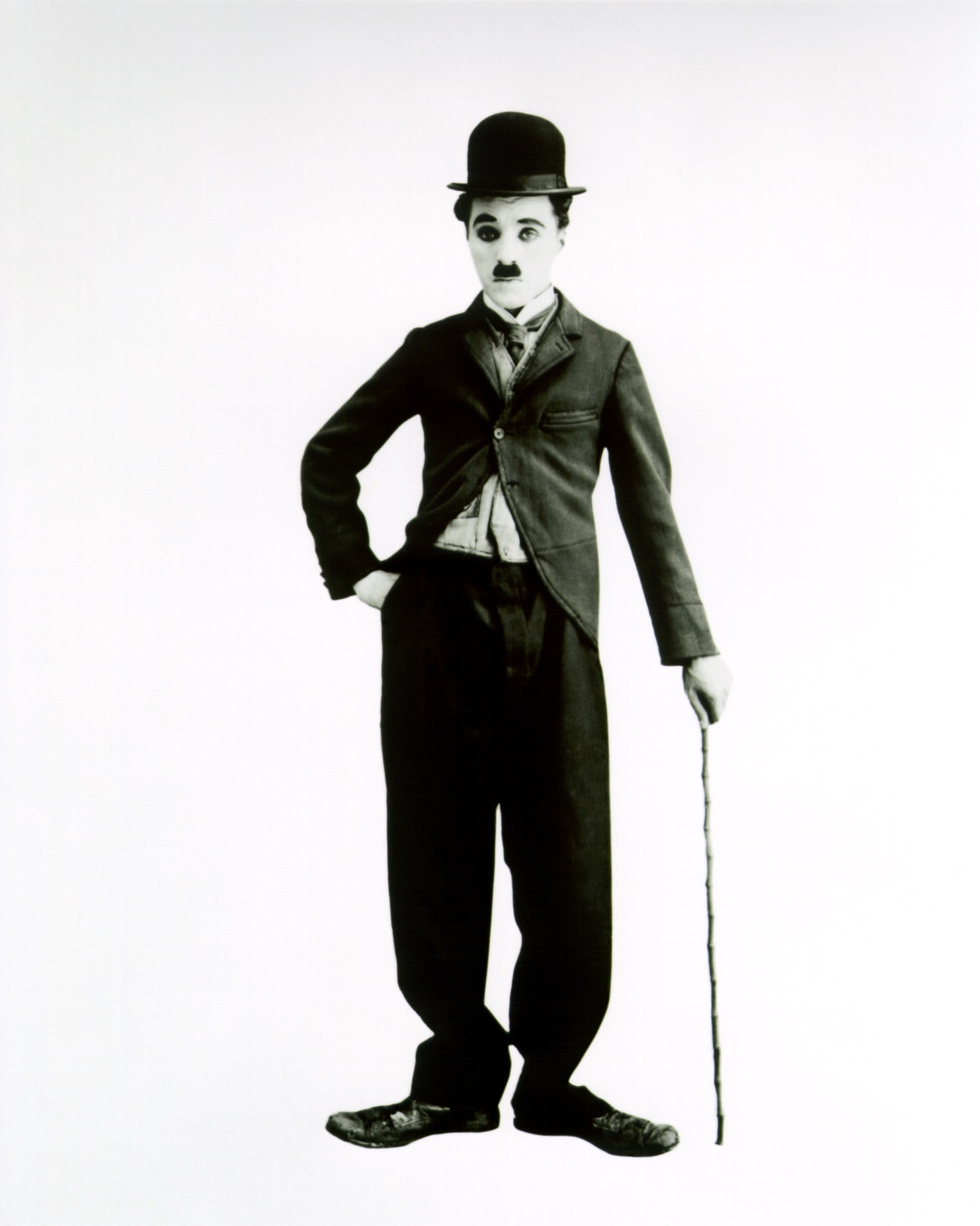
In our era, we struggle to understand issues that people faced in bygone days. Charlie Chaplin understood and helped people emote to the harmonium’s repetitive tunes. He romanced the camera turning simplicity into hilarity and heartbreak.

2011’s best picture hit The Artist, gave modern audiences a sumptuous taste of film history. Oddly, it prepared me to watch this Chaplin film for the first time, and it was a lovely hour and a half spent.


I dare you to try it. Get to know the glorious black and white. Learn to read lips, facial expressions, and body language. Delight in young talent. Settle in for a short time at a safe distance from the chasm between poverty and prosperity that they knew too well in the 20’s. You may surprise yourself and fall for Chaplin’s flat feet, cane, and satche as I did.


MOONRISE KINGDOM movie review 2012

Wes Anderson gets it.

Whatever “it”is, you may say in that sarcastic tone. But I will keep believing, perhaps forever, that this acclaimed, genius director of detail simply…gets it. His complex and vivid characters speak with endearingly blunt honesty.

“I love you, but you don’t know what you’re talking about.”

“I love you too.”

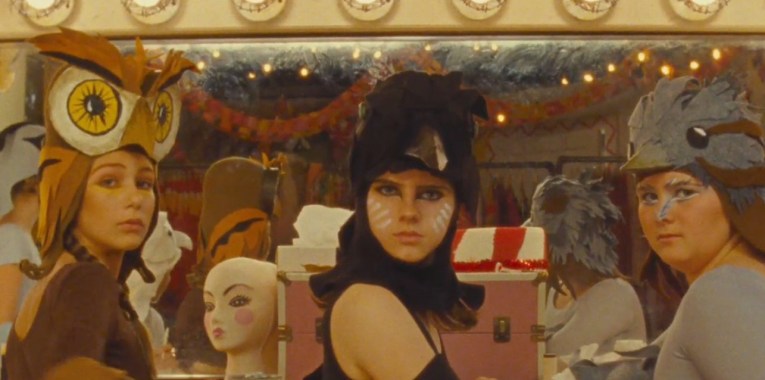
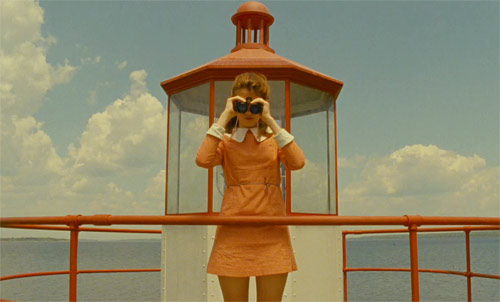
I love this face:

One of my students claims that “Wes Anderson makes children’s books that come to life.” Agreed, Becca.   Anderson is indeed a visual storyteller whose medium is life-sized diorama. The doll houses, cut in half, swing open to reveal intricately placed treasures, and as the camera pans through we understand that pieces of the story are unfolding.

He is the king of moving panoramic shots, of directness in monotone line deliveries, of awkwardness from a swash of the explicit, of color schemes, of the quintessential slow motion sequence. His style is unmistakable once you are aware of it.

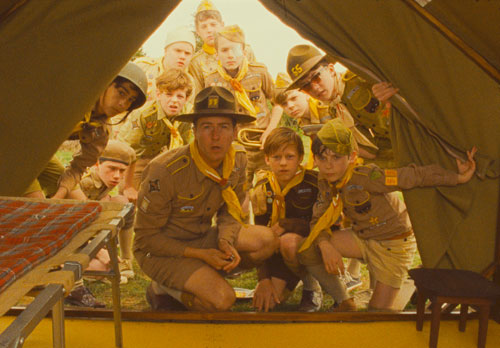
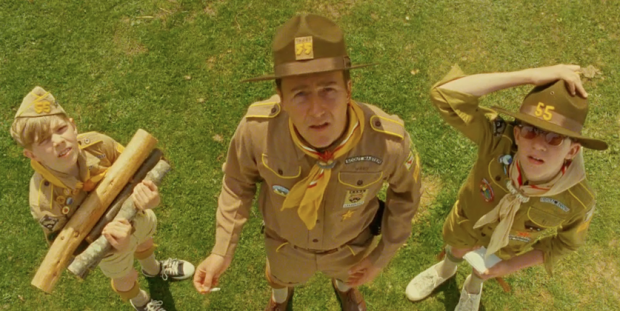
I love how his brain works – how he sees the world. I would dare call this director an archaeologist, for he uses found objects ritually and often symbolically. In this film, it’s the brooch, a record player, a pair of binoculars, a scout uniform, a tent, a map, a megaphone.

This film is a love story, but somehow sadness mingles with the sweet. Heartbreak. This film is for Anderson fans, young and old, to drink in, frame by frame, with delight. Just know that it’s totally Anderson, and that it wouldn’t be without that one scene. Moonrise Kingdom‘s one scene occurs in the place where the film gets its name and is so over-the-top verbally awkward and sexual that I’m surprised they didn’t earn a higher rating.

Through the eyes of Anderson, we become fellow anthropologists and sociologists. We study the fragments and artifacts of humanity. We listen to blunt, refracted statements that leave us heartbroken then bursting with the crowd in laughter. It’s all about relationships. A husband an wife who can only talk shop,  a sad officer who has to borrow family, a powerless leader, an angry boy and girl: very real pain, very felt love. Loneliness camps out on every island spot searching for belonging, for care, for home. It is rarely secure. Here, we join Anderson on the excavation and inevitably find life beneath the dirt. And, perhaps we find that we all belong and are … kindred spirits after all.

Thank you, SIFF, for a beautiful premier at the old, glorious Egyptian Theater in Seattle.

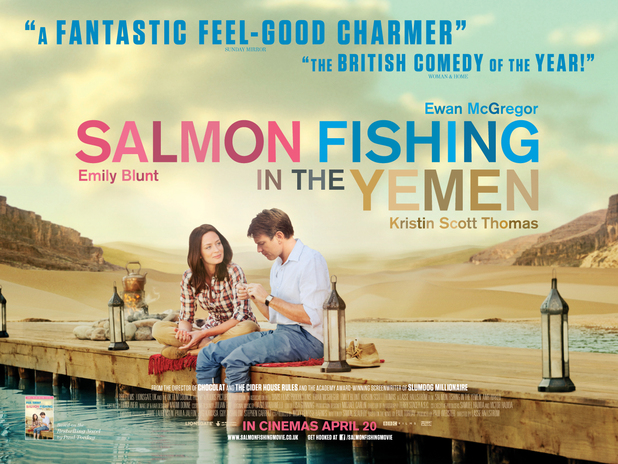
SALMON FISHING IN THE YEMEN (2012) movie review

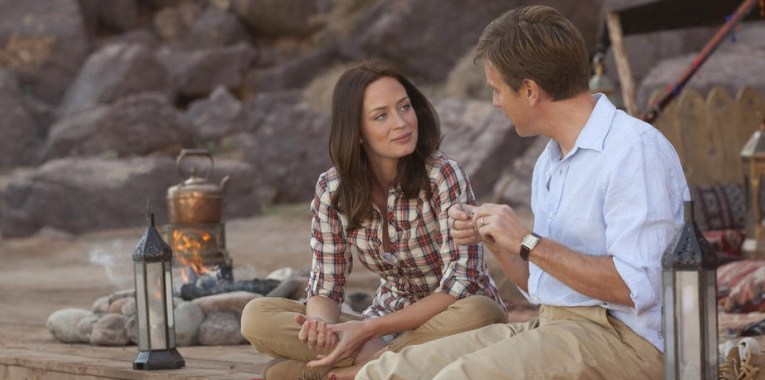
Emily Blunt requires no introduction. She is a stand alone class act, so set her next to a seasoned professional the likes of Ewan McGregor and you see the execution of story on-screen in believable complexity. Every glance on camera becomes a moment, every scene a dive into vast depths of character. 
These actors allowed a slow and disconnected script its chance to soar a bit before sinking again beneath the depths of forgettability.

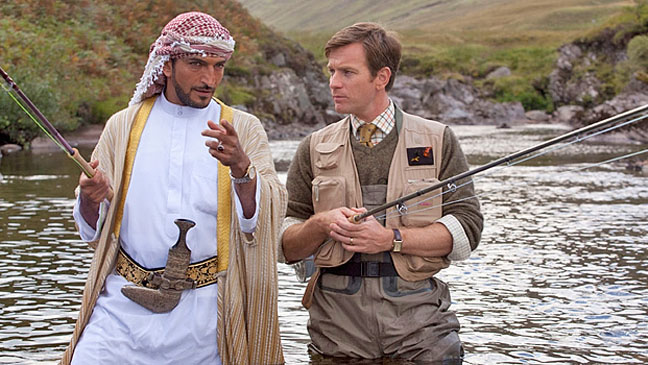
Faith was a major theme in the film. People of both faith and science found kindred community in the love of fishing.
Tolerance a token rebuke, this film preached peace through faith and forgiveness. Important truths, lovely sentiment, but lacking directive for faith in something or someone specifically. The sheikh pronounced faith in God, but otherwise mentored the broken individuals with a curious concept not a concrete one. I did love his character, though. Certainly, we want to be questioned, not preached at. But this vague religion is too much intermingled with politics to present a proper question worth pondering.  Perhaps the sheikh meant faith in fish. This film had the bird watching pace of Big Year and the propaganda elements to near Happy Feet levels. Perhaps it could be construed as an anti-government piece …red tape and all that.  This British film push ideas without structure, and unfortunately feels too deliberate and disorganized to be truly thoughtful.

I loved the song in the closing credits: “Where you go” by the young Romans band.

IRON LADY (2012) movie review

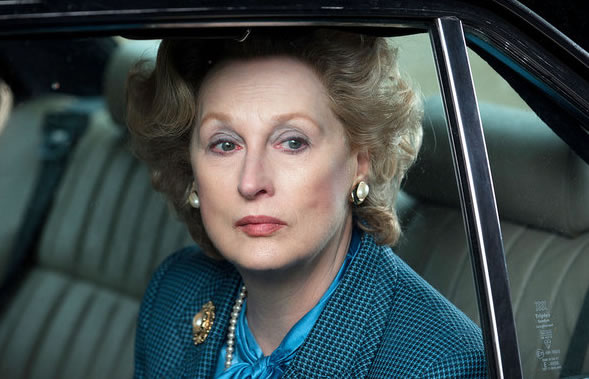
THE trumping triumphant fearless woman: Iron Lady sums it up. She pounces the pile of leaves without a thought, never considering the possibility of  hidden danger within the pile. Though sometimes bruised and pained, she was one who walked bravely into a man’s society to fight for causes and to do what she believed to be right despite the losses. Well-spoken and task-driven, she was one who stood her ground through war and tragedy and saw Britain through to better days.

 I struggled to see her humanity. She hurt for the bigger picture, for an entire country, but missed out on the lives at home. She was bold and almost boyish or robotic. I admire and pity her.
The genius of this film is that it recalls to life her husband, her point of deepest regret. We all have in common the fact of regret which stems in hindsight. The “if-onlys” can dry us up. Meryl Streep, once again, breathes character into a lost icon. We leave the theater saddened but somehow still encouraged.

WAR HORSE (2012) movie review

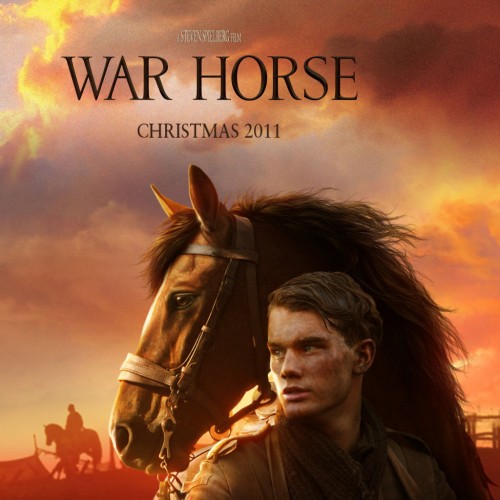
Spielberg, no doubt hoped for an epic. I’m sure that equestrians and fans of Spielbergian battle sequences will find this film perfect. A trusted, film-loving friend of mine dedicated herself to 3 viewings of this film in the theaters. She loves all things Cumberbatch and Hiddleston. Agreed. They are lovely. If only I could dream in such cinematography. Gorgeous in every frame, of course.

I however, found it lacking in story and character development…possibly my two great musts in film love. It was hard to empathize with the horse. The facial expressions were hard to read. Perhaps a method actor?

Other characters came and went so quickly, we barely had time to buy in. Most seemed interesting, but doomed. And, all were tragically doomed.

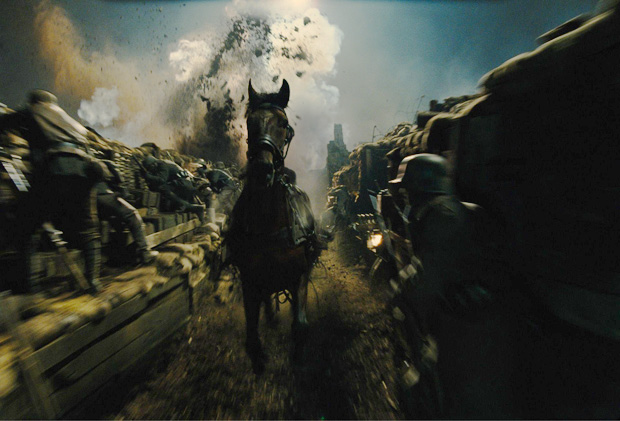
WWI feels redundant at best, neck deep in trench muck. Not even the great creator of Band of Brothers could make this war seem a worthy front for fighting.

One scene stood out from the rest, making a moment of life-changing film watching for me. It was worth the rental and the whole watch for me. The horse is tangled in barbed wire between the two front lines. A momentary truce is called, white-flagged to save the horse. Two soldiers, one German and one British, meet and greet and chatter congenially while working together to set the horse free. They wish each other well and walk back into battle reminding the other to keep his head down. The beauty of this moment, of peace and good will, mingles in the odd confusion of duty and conflict between brothers at war.

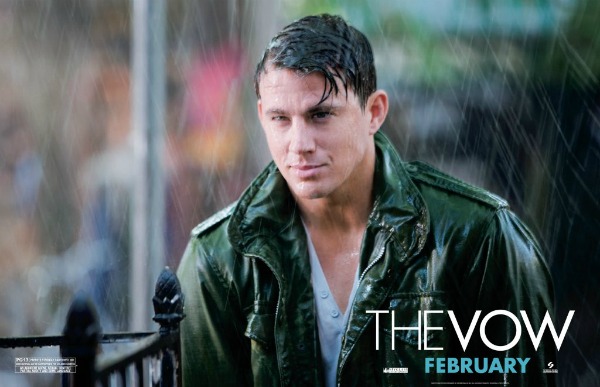
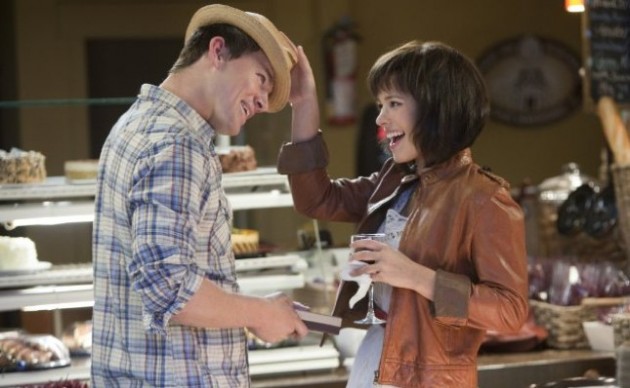
THE VOW (2012) movie review

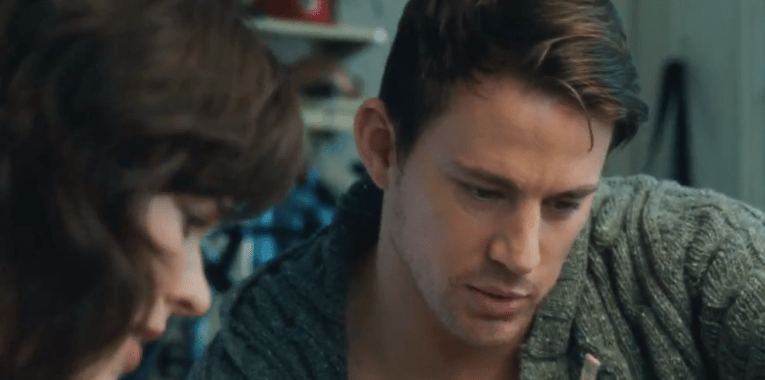
Only an original or neatnik knock-off Nicholas Sparks could tempt us into the theaters wooing us like a candyman into the heart of chick flick central. Does it end well? No. Is it well acted? Not really. Does Channing Tatum take his shirt off? Yes. Yes he does.

So we drive shamelessly to theaters to tempt and tantalize and torment ourselves with lies that one completely selfless, artistic, immutable, soft-spoken, generous, heterosexual, charming, chivalrous, chiseled, constant, all-loving, perfect man exists for each of us off-screen.

EXTREMELY LOUD AND INCREDIBLY CLOSE (2012) movie review

EXTREME  stream of consciousness:

thrust, pain, 9 – 11, wander, wonder, fall and falling, alone to wander, never swing, sell, consume, buy, drink, speak! scream, play, sell, cry, dust, play, spell, chart, graph, organize, know, hear, listen, speak, spell, sell, know, known, No.

LOUD  contrasts:

I stop in NYC on a busy street and hear a buzz of voices, traffic, horns, businesses, etc. There is no real quiet in the city. It’s the price you pay for city life. Some love it.

The blunt contrast is my Uncle’s farm on the prairie in Minnesota. Stop and stand there in the tall grass of that dark earthy place and stay long enough, you’ll hear the wind moving the grass, crickets, and perhaps the distant freeway.

I think this film is about Asperger’s syndrome. It could have coincided with any tragedy in a boy’s life, but in this case, 9 – 11 in New York offers setting, a mere marker on a map to anchor the boy’s quest for illumination.

INCREDIBLE performances:

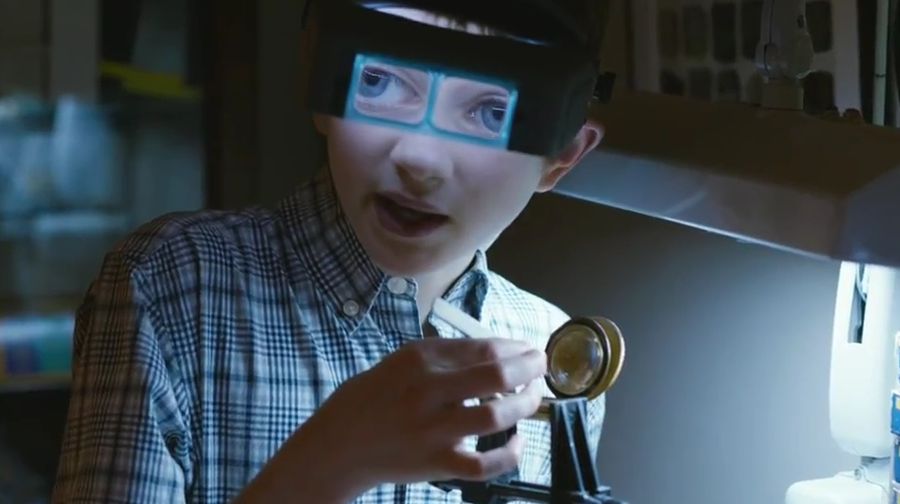
I’m shocked that the boy, Thomas Horn, (winner of the 2012 Kids Week on Jeopardy) wasn’t recognized by the academy for this genius performance. He shows the inner struggle perfectly – the irony of the why in grief. Responses to grief are as unique in execution as speech: individualistic in  dialects, accents, cultural biases, colloquial norms.  We do not have answers for questions like why people die and why it hurts. We cannot explain it to adults, let alone children. We are all learning how to help one another. And young Oskar Schell, despite the unique way that he sees the world, carrying his tambourine into the living rooms of strangers, will not find answers either.
CLOSE-ups:

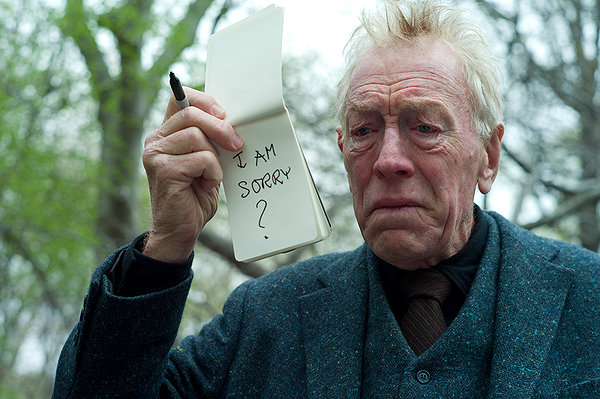
This film plays like a hymn. Four or five verses with a similar melody, without choruses to break up the consistency. It perhaps needed a chorus or two. The consistency of tension and grief in this film is exhausting. I suppose it enforces a new empathy for a syndrome that requires monotony, routine, pattern, and sameness. I do love the scenes with Max von Sydow. He is precious, beloved.
My favorite verse in this hymn is a scene that sums up the whole film.  The boy visits Viola Davis, asks for iced coffee, and throws out elephant facts as she cries. He takes her picture even after she says no.

I love parallel moments in film, and when he finally breaks and asks a stranger for forgiveness, I am broken too. This film does have the power to move people, to help us see strangers as people of stories and loss and hope, like us. It helps us relate to those we cannot hope to understand. It give us hope to see and swing and laugh and live another day.