High school films fall short despite their attempts at brutal honesty. What Mean Girls meant to decades of squads unsung unrecognized, to those who never got their 15 minutes of Breakfast Club fame. What Bill & Ted and Bring it On did to cultural shifts in lingo. What Urban Dictionary has done for teachers’ attempts at relevance and avoiding accidental overshares. What Dead Poet’s still does to scratch the surface of the wound still scarred. This film. This little “indy” ace did again. In a 500 Days of Summer way, it About a Boy‘s its Will Hunting guts straight into the marrow of your film loving heart.
Honest, real, alive, funny, and heartbreaking. The lines oddly give so little insight into the characters. A film teacher once told me, “Characters are what they do.” No film seems to present that in a truer way. These teens speak in circles but it’s what they do that moves you.Friends are just there. They stay there and keep coming over. They enter your world and learn about you. They may try to keep you laughing, they may say they don’t care. They may be dumb and you may be too, but it doesn’t matter. This movie is about real friendship, real grief, real life. If you’re not ready for that, don’t see it.
Shut ins. Captives. Mother and son make the most of their tiny prison. To him, his whole world is Room. Room is real. TV is not real.The film offers sweet narration from the child’s perspective, from Jack on the day he turns five. He wakes up to greet the day and each object in Room: “Good morning Chair. Good morning Sink.” He and his mama exercise and wash clothes and bake a birthday cake. Almost all seems lovely from the boy’s eyes, but even he can see his young mother’s far off, wounded, fearful expressions. Her sorrow is not his yet. For that they are both grateful.
His whole world is within Room with his Mama and the nightly visitor that he hides from named Old Nick. He never speaks to Old Nick who sometimes brings them things they need then stays the night.Everything shifts when Mama reveals her precious secret one day: there is World outside of Room.
This film is divided in half: daily life inside Room, then life outside in World.Yes, they escape. It may be important knowing that before you watch a film like this. The painfully dark, horrifying concept of abduction is lightened only somewhat by escape as reentry takes as much if not more gumption for survival.
I do not know how Brie Larson was able to play such a role, to embrace this character in such a desperate situation. Larson did shine similarly in an (almost as difficult to watch) indie film from 2013 called Short Term 12 about the staff and students at a temporary group foster care center. R-rated for a ton of foul language, it presents realistic and difficult subject matter. Seeing Short Term 12 did something amazing for me. It renewed my own hope and endurance in the ever-exhausting field of education. It’s worth it to be there for students. That film was a much needed shot in the arm. Room is mostly heartbreaking, but hopeful in its own way.Hope is a strong word. Hope is weapon against despair. Hope grows, like the leaf on Room’s skylight that showed them seasons, change, future flight, and rebirth. There is life outside of Room. Goodbye Room. Hello World.
The Spotlight team of journalists at the Boston Globe uncovered the story of a lifetime. In 2001, a new editor asked the team to look into the case of the priest who had been caught molesting children. What they found felt like an epidemic: 90 priests had been caught and quickly reassigned to a new church districts, sadly to molest again. They discovered that the truth had been swept under the rug by the highest power in New England and had stayed covered by a team of lawyers being bankrolled for it.The team of reporters followed every lead they could. Each rabbit trail lead to new victims who called themselves survivors, and for good reason. Many of the now grown children who had been molested had killed themselves. Most had turned to drugs or another kind of stimulant, perhaps to numb themselves from the painful truth.The three reporters Sacha Pfeiffer, Michael Rezendes,, and Matt Carroll were brilliantly played by Rachel McAdams, Mark Ruffalo, and Brian D’arcy James. In an interview with NPR, (linked here) the Pulitzer Prize winning team revealed a lot about the work that was done through this story, about the heart of the heroic team, and about the making of the film itself. Their bold boss Walter “Robbie” Robinson, played brilliantly by Michael Keaton, said that he didn’t know that he ever came across as harshly as he did, and after seeing “himself” in the film, he called Sasha to apologize for ever treating her rudely. I didn’t see rudeness. I saw and empathized with the entire team as they spent a year or more of their lives buried in painful interviews and research. The topic alone would exhaust any group of reporters, but the Spotlight team sat neck-deep in it for years in order to bring truth into the light.A few weeks ago, my class had the rare and incredible opportunity to Skype Mr. Matt Carroll. Hosted brilliantly by another teacher who used to write for the Boston Herald, she fielded questions that students posed so Matt could talk about the personal pain of writing a story like this. He spoke of the difficulty of his particular job and the excitement of finding evidence that they could finally print. He spoke of and his fear for his family and community at the time knowing one of the priests lived down the street from him. He talked about long days and months of answering phones after the story broke. He mentioned how wild it was seeing someone play him in a movie. His doppelgänger hated the mustache but conveyed the gentle intensity, sorrow and stubborn search for truth perfectly.Carroll said that the actors had one dinner out with the Spotlight team and in that short time picked up their mannerisms, accents, quirks. They all said that watching themselves on-screen was odd since the actors were so spot on.
To a group of reporters, it’s their job to interview as many people as possible and to research the minutiae of the story in order to gather details that show the whole truth. We readers forget that truth tellers rarely win popularity votes. They may be exhilarated in the hunt, but their hearts still drive them through the mire and stench of human depravity. Two of the three reporters did experience their own crises of faith, like many of the families who were wounded by priests at the time. The screenwriters were disappointed that Matt never had a crisis of faith after it all. He said he was a Presbyterian and still went to church and didn’t need one. I was glad that they didn’t fabricate one for him in the name entertainment. Matt was too. He spoke of the new Cardinal who is still working to heal the old wounds in Boston. Healing takes time.
We long for justice, and for some it comes in print, in the new-found empathy from friends and family, in the church’s own contrition and attempts at reconciliation in this aftermath, and even in a film fifteen years later that teaches a new generation of children to protect their bodies and let go of guilt.This difficult topic makes your blood boil, and rightfully so. You want to fight with the Spotlight team. You see the hours, days, years that they poured over old newspaper clippings, record books, information outlets, and their own notes before they ever printed a story. Journalism, it seems, is mostly about research, interviewing honest sources and getting the facts straight. Or, at least it used to be.
In the name of immediacy, news sites today too often print, quote, or tweet false stories and unresearched details knowing they can as quickly retract what they get wrong over the same mediums. Sadly, forsaking the truth used to carry consequences, made the writer almost as culpable as the criminals. Media conglomerates compete, as they always have, but at what cost?
It perhaps takes a film like this one, fifteen years after the story rocked the nation, to teach the lessons again and to remind the world that the truth will eventually come into the light and that the pen is still mightier than the sword.
Always the lone gun. Always on the move. Always sifting through cities for the faces of his enemies. Bond. James Bond.Until now, the blonde Bond has never cracked a smile, but what’s this? Could his Grinch heart have grown three sizes? Perhaps three to accommodate his number of female conquests per show. He’s still Bond…like a traveling salesman with a woman at ever port. Always the wanderer with a savior complex.Ever suave, adjusting cuff links, ever walking calmly away from burning buildings and exploding cars, shoulders first like an underwear model mid-photoshoot. His pristinely pressed and combed remains unscathed, and yet, the assassin Bond has perhaps grown a conscience about his occupation. His sins and the faces of those he hunted and killed haunt him more now. Therefore the inner conflict of this film seemed to be Bond’s choice: when to pull the trigger or more so when not to. The audience gets the view from the scope many times thanks to director Sam Mendes. Don’t assume that Bond doesn’t still leave a massive body count in his wake, but somehow now he cares and needs to prove that mercy can triumph over justice sometimes and that killing isn’t always the answer. New leaf for a Bond film. For any film, actually. This one plays out more like a Mission Impossible or Borne film with a host of action scenes and stunts as our man lifts off from one helicopter to the next, half smiling and saluting, ready to take one more fist to the face to save the world. Yet amidst the action and excitement, it posits the moral quandary making each life valuable. Still rather violent, but comparatively less blood than we’ve seen in the past. So many nods to classic Bonds, this one played more like Sean Connery’s Dr. No in certain scenes. Ralph Fiennes brings such perfect contrast in his role as the savvy and sorrowful new M. You feel his helplessness, and yet you trust that he has a trick up his sleeve. Christoph Waltz brings a quiet sophistication with his broad grin and brilliant bad guy persona. Sadly, his case is just a little too easily solved, this conflict easily taken care of. Holes in the plot seem to matter less than if the suit has been properly laundered. So relax. All is proper. All is lovely. All is calm and bright and classically shaken not stirred in Bond’s world.
J.J. Abrams, now sainted by the fan kingdom for performing the Christmas miracle of reviving an old whispered hope that Star Wars could return to its former gritty glory, did it. He did it. Every hint, allusion, repeated line, respected motif. It’s all there.The nods to the Star Wars canon of films and universe lore were extensive. They allowed family and friends to participate on set in small ways and asked the old gang of concept artists to get back together to dream for VII.
I trust J.J. as a director for a plethora of reasons, and I respected him all the more when he called my friends who made this short “Open Letter to JJ Abrams” prior to filming to ask them for their thoughts as he started creating VII.
Anyone who could handle Trek fans with their Klingon blades at the ready can handle all of us teary-eyed New Hope hopefuls who just can’t handle any more 1-2-3 Jar Jar debacles.
Light, the constant motif, battles the Dark Side in thoughtful parallels. The First Order, in the tradition of the Third Reich, allows Domhnall Gleeson his own St. Crispin’s Day speech as little Hitler. An incredible speech that no doubt would make the little Vader, Kylo Ren, jealous as they whine and fuss over who will sit at the right hand of Lord Snoke.So the CGI worked, as it appropriately nodded to George Lucas and ILM’s life works but didn’t go overboard. Most CG characters were meant to be despised. The likable oracle however, Maz Knata, with her all-seeing tiny eyes, had Han’s approval and therefore ours. He nods, we nod. He falls, we fall. We may have seen it coming, but it’s still a shock, no matter how poetic it was.The power of the force was treated exactly like I’ve seen addiction. Ben Solo, now Kylo Ren, craves it, seeks it, cherishes it, blocks out all others. He’s addicted, swallowed by it. His father wants to rescue him at all costs. Han’s fatherly love is beautiful and sacrificial. Perfect.We also rejoice and applaud vigorously in theaters along with the new characters as they too rediscover old favorite characters, ships, weapons, and the mysteries of the force. My friend, Dusten (pictured below dressed as Kylo Ren for opening night, followed by his daughters in festive array. They are the best!) said that he loved how the three new characters were given Luke’s characteristics. It’s true, equal parts insecure orphan, trooper uniformed rescuer, and stellar pilot.These characters are wholly delightful and still full of mystery. Daisy Ridley’s Rey character is brooding and searching but full of the force, and she has yet to show us her true potential. She made us believe in her universe. As I always say, a main character has to be pitiable and good at something for an audience to buy in, and her survival skills on point make her both. Fin, played by John Boyega, according to the exposition is basically one of Invisible Children’s rescues. He has his Jack from Lost’s savior complex in tact, and he’s reluctant enough to drop into any scenario with our support. We want him to win forever.
Poe is still a mystery, and I’m hoping that the next installment allows us to see his broken-hearted backstory or career-driven intensity hault for comic relief or the greater good. Oscar Isaac. Love him immediately.
Leia, Han, and Luke looked good. The adventure is only beginning as there are worlds to save and new friends to make. So, may the light sabers of the season make your days all the more merry and bright.You’ll have to go see it for yourself…
See the magical, mystical, force-filled, saber-fighting, falcon speeding, droid spinning, canteen buzzing, blaster waving, planet hopping, Wookie calling, smuggler running, wonder of a series reborn.
War inevitably results in collateral damage. Legs, arms, minds, whole lives forfeited while the opposition resets and plans next moves. Desperate times force characters to choose allegiances, values, alliances. Gamemakers reset within the city walls. None are safe. The victor hero and spokesperson, Katniss Everdeen, remains the ugly-crying face of the rebellion carrying her personal vendetta against President Snow up the steps of the Capitol. Leading rebels in civil war proves more difficult post Peeta’s mind meld with Snow. Battle rages. Mine fields are set. With every step, detonation or success?
No more showstopping costumes aflame, no more fake romance drama and lies, no more appeasing the Capitol viewers in the old ways. Or so they think. All is televised, all is heresay and henchmen. Faceless guards rack up the body count while Districts unite to attack one final time.It’s all difficult to watch. I struggle through war films, question everything. I wonder, when do we audience members become like the Capitol? When does a well made film turn viewer into voyeur?Katniss defends. She has killed, but is she a killer? Motives muddle. Pressure mounts and armies assemble. When is a single life expendable? In war, do the rules of morality change? When do soldiers forget that war is not a game?Some would say these are just movies. Action and sci-fi adventure. Drama and a nice blend of peace and romance amidst explosions and chaos. In my opinion, these are not simply films. They are not made for entertainment alone. They cannot be. They are perhaps cautionary tales. Story and history mimic and repeat, ebb and flow. We pray the world will never repeat in history this story of Panem.
We all love De Niro. We cuddle and coo as he leans in making faces at us all. He could make a silent film, and the world would return his mutual affection.Anne Hathaway, I am convinced, is Shakespeare’s vampire-bitten wife by the same name, ageless and continually remaking Princess Diaries and the Devil Wears Prada. She’s finally made it as her own boss in this one, and she is determined to show that she can run a company all by herself without becoming a hateful, bitter, or too busy to have a family. This film promotes the positive business model of improving a work-life balance. It examines the pitfalls of start-ups, the benefit of experienced voices in the workplace, and the process of mentoring. Obvious from the previews, it’s an anti-agism play, but DeNiro rises as the professional for his kindness, his offering of time, his gracious attitude, and his personal initiative. He alone proves that gentlemen do exist and pocket squares are proof. The office falls for him, and his reward is helping each co-worker find success. If that were every worker’s personal motto, the face of business would be changed. Seeing this on the heels of Steve Jobs (2015) proved a fascinating study on growing businesses, sharing ideas, and becoming a business leader. Where Jobs repulsed, DeNiro wooed. The Intern, which feels a great deal like an attempted sequel to The Internship(2013) is full of Home Alone hyjinx and freshmen boys bathroom humor. Not enough to be sorry I saw it, but enough to never really need to see it again.
I’ll call it a film triptych as three periods of time, three locations, and three types of cameras parallel Jobs’s three historical product launches.If you’ve watched The West Wing or The Newsroom, you’ve already taken a class in “sorkinese.” Aaron Sorkin writes with poignant, often profane cutting banter but has an uncanny ability to allow great actors to shine and the characters they play to remain flawed but incredibly likable.Fassbender is to Jobs as Reeves was to Superman. Put on the turtleneck and white tennis shoes and away he goes. Meanwhile, Kate Winslet’s sweeps the rest of the audience in under her protective umbrella to watch the rest of the performance. She is caretaker and necessary foil to Jobs’s hero.Sorkin weaves fictional story plots into true history with provocative threads of conversation. He builds an intricate spiderweb of verbal sparring between those closest to Steve Jobs, whose pride and potential trap him in the center of the web. The illusive enemy and savior become one as iNnovation thrusts the world forward simultaneously cutting friendly and familial ties. His own daughter is among the collateral casualties. Jobs conducts the creation and release of the future of personal computing while his orchestra of brilliant tech and financial wizards play in the pit. They all must play the roles they are given, but without the sacrifice and leadership of the front man, all would be lost. Jobs sees this. It takes a strong, driven leader with unparalleled focus to make history like he did. The question posed, as always, is: is it worth it at the expense of relationships. Must genius doom itself to solitude?As films go, this one haunts. The Tron-esque pulsing score matches the blood pressure of the film’s namesake. Danny Boyle, the director, uses people as props and lighting as sets, playing on the algorithms and symmetry of people on the move, of friendly connections severed, of puzzle pieces placed over decades as industry stretches forward to match the dreams of innovators.
A few flashbacks literally flash in between scenes of dialogue as the three art pieces, poised and playing in real-time hand-cam style stand adjacent in order to be appreciated as a singular masterpiece in three parts.
The Martian marches into the coveted “#1 movie in the world” spot for good reason. Ridley Scott hit another home run with a film that yet again seeks to bring Matt Damon home. We never grow tired of chasing that man. Private Ryan, the Bourne trilogy, Interstellar, now The Martian.This film is a giant leap for outer space storytelling after many films that take only small laborious steps from one malfunction to the next. This film achieves the same survival efforts but perks up the pace by blending them with upbeat attitudes and humor, a boost for math and science education, and a swell of hope.We wonder if we’d make it. On the reality tv series Survivor, it’s more about interconnectivity and socio-relational survival. You’ve gotta win the trust of the right people. Our Martian is all alone but can somehow function, create, self-motivate, and build. Fortunately he is vlogging, or video journaling, instead of talking to a volleyball. There is a countdown, rationing, always a next step.Then the supporting cast gets to work. The future NASA as it is presented, looks feasible as they pull an Apollo 13 by pooling their efforts and collective genius. Jeff Daniels, Kristen Wiig, Donald Glover, Jessica Chastain…the list goes on. It’s a beautiful cast on a film worth seeing.Damon’s character Watney sees problems as opportunities. He strategizes and builds, sets deadlines and works hard to meet them. In his own quirky way, he says goodbye to every little thing, thanking storage bins and chairs for helping him make it each day. Gratefulness goes a long way. And whether he survives or not, you feel, as he does, simply thankful for each day, each sunrise, each plant, each breath.The message of this film is clear: life is precious and worth fighting, striving, creating, growing, learning, laughing, surviving for. Don’t miss it, any of it.
As you can see, Splatter: On FILM is getting a major, fab facelift.
Unfortunately, this site construction seems to be spamming our followers by telling you that each post is brand-new. At the risk of losing followers, please note that this is because we are updating all kinds of things internally. Please ignore the spam, but don’t unsubscribe. We will be back with a new post tomorrow, and we look forward to hearing your thoughts on the new look!


 High school films fall short despite their attempts at brutal honesty. What Mean Girls meant to decades of squads unsung unrecognized, to those who never got their 15 minutes of Breakfast Club fame. What Bill & Ted and Bring it On did to cultural shifts in lingo. What Urban Dictionary has done for teachers’ attempts at relevance and avoiding accidental overshares. What Dead Poet’s still does to scratch the surface of the wound still scarred. This film. This little “indy” ace did again. In a 500 Days of Summer way, it About a Boy‘s its Will Hunting guts straight into the marrow of your film loving heart.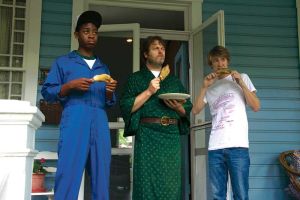
 Honest, real, alive, funny, and heartbreaking. The lines oddly give so little insight into the characters. A film teacher once told me, “Characters are what they do.” No film seems to present that in a truer way. These teens speak in circles but it’s what they do that moves you.
 Friends are just there. They stay there and keep coming over. They enter your world and learn about you. They may try to keep you laughing, they may say they don’t care. They may be dumb and you may be too, but it doesn’t matter. This movie is about real friendship, real grief, real life. If you’re not ready for that, don’t see it.


 The film offers sweet narration from the child’s perspective, from Jack on the day he turns five. He wakes up to greet the day and each object in Room: “Good morning Chair. Good morning Sink.” He and his mama exercise and wash clothes and bake a birthday cake. Almost all seems lovely from the boy’s eyes, but even he can see his young mother’s far off, wounded, fearful expressions. Her sorrow is not his yet. For that they are both grateful.
 Everything shifts when Mama reveals her precious secret one day: there is World outside of Room.
 Yes, they escape. It may be important knowing that before you watch a film like this. The painfully dark, horrifying concept of abduction is lightened only somewhat by escape as reentry takes as much if not more gumption for survival.
 Hope is a strong word. Hope is weapon against despair. Hope grows, like the leaf on Room’s skylight that showed them seasons, change, future flight, and rebirth. There is life outside of Room. Goodbye Room. Hello World.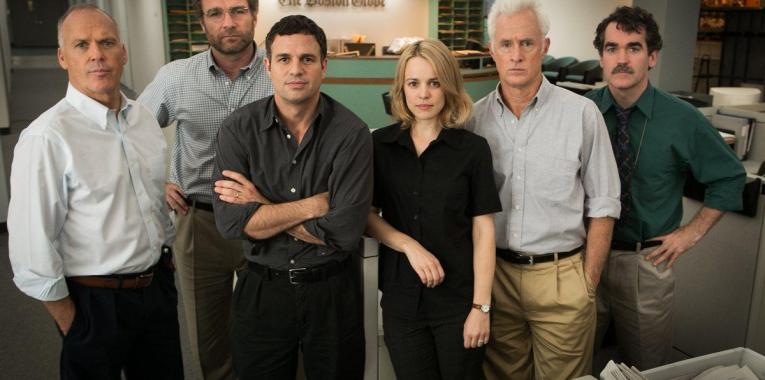
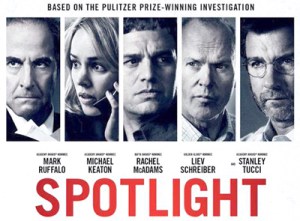 The team of reporters followed every lead they could. Each rabbit trail lead to new victims who called themselves survivors, and for good reason. Many of the now grown children who had been molested had killed themselves. Most had turned to drugs or another kind of stimulant, perhaps to numb themselves from the painful truth.
 The three reporters Sacha Pfeiffer, Michael Rezendes,, and Matt Carroll were brilliantly played by Rachel McAdams, Mark Ruffalo, and Brian D’arcy James. In an interview with NPR, (
 Their bold boss Walter “Robbie” Robinson, played brilliantly by Michael Keaton, said that he didn’t know that he ever came across as harshly as he did, and after seeing “himself” in the film, he called Sasha to apologize for ever treating her rudely. I didn’t see rudeness. I saw and empathized with the entire team as they spent a year or more of their lives buried in painful interviews and research. The topic alone would exhaust any group of reporters, but the Spotlight team sat neck-deep in it for years in order to bring truth into the light.
 A few weeks ago, my class had the rare and incredible opportunity to Skype Mr. Matt Carroll. Hosted brilliantly by another teacher who used to write for the Boston Herald, she fielded questions that students posed so Matt could talk about the personal pain of writing a story like this. He spoke of the difficulty of his particular job and the excitement of finding evidence that they could finally print. He spoke of and his fear for his family and community at the time knowing one of the priests lived down the street from him. He talked about long days and months of answering phones after the story broke. He mentioned how wild it was seeing someone play him in a movie. His doppelgänger hated the mustache but conveyed the gentle intensity, sorrow and stubborn search for truth perfectly.
 Carroll said that the actors had one dinner out with the Spotlight team and in that short time picked up their mannerisms, accents, quirks. They all said that watching themselves on-screen was odd since the actors were so spot on.
 This difficult topic makes your blood boil, and rightfully so. You want to fight with the Spotlight team. You see the hours, days, years that they poured over old newspaper clippings, record books, information outlets, and their own notes before they ever printed a story. Journalism, it seems, is mostly about research, interviewing honest sources and getting the facts straight. Or, at least it used to be.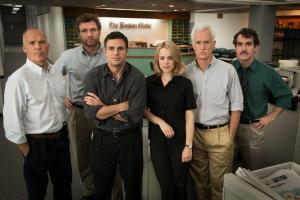

 Until now, the blonde Bond has never cracked a smile, but what’s this? Could his Grinch heart have grown three sizes? Perhaps three to accommodate his number of female conquests per show. He’s still Bond…like a traveling salesman with a woman at ever port. Always the wanderer with a savior complex.
 Ever suave, adjusting cuff links, ever walking calmly away from burning buildings and exploding cars, shoulders first like an underwear model mid-photoshoot. His pristinely pressed and combed remains unscathed, and yet, the assassin Bond has perhaps grown a conscience about his occupation. His sins and the faces of those he hunted and killed haunt him more now. Therefore the inner conflict of this film seemed to be Bond’s choice: when to pull the trigger or more so when not to. The audience gets the view from the scope many times thanks to director Sam Mendes. Don’t assume that Bond doesn’t still leave a massive body count in his wake, but somehow now he cares and needs to prove that mercy can triumph over justice sometimes and that killing isn’t always the answer. New leaf for a Bond film. For any film, actually. This one plays out more like a Mission Impossible or Borne film with a host of action scenes and stunts as our man lifts off from one helicopter to the next, half smiling and saluting, ready to take one more fist to the face to save the world. Yet amidst the action and excitement, it posits the moral quandary making each life valuable.
  Still rather violent, but comparatively less blood than we’ve seen in the past. So many nods to classic Bonds, this one played more like Sean Connery’s Dr. No in certain scenes. Ralph Fiennes brings such perfect contrast in his role as the savvy and sorrowful new M. You feel his helplessness, and yet you trust that he has a trick up his sleeve. Christoph Waltz brings a quiet sophistication with his broad grin and brilliant bad guy persona. Sadly, his case is just a little too easily solved, this conflict easily taken care of. Holes in the plot seem to matter less than if the suit has been properly laundered. So relax. All is proper. All is lovely. All is calm and bright and classically shaken not stirred in Bond’s world.

 The nods to the Star Wars canon of films and universe lore were extensive. They allowed family and friends to participate on set in small ways and asked the old gang of concept artists to get back together to dream for VII.
 So the CGI worked, as it appropriately nodded to George Lucas and ILM’s life works but didn’t go overboard. Most CG characters were meant to be despised. The likable oracle however, Maz Knata, with her all-seeing tiny eyes, had Han’s approval and therefore ours. He nods, we nod. He falls, we fall. We may have seen it coming, but it’s still a shock, no matter how poetic it was.
 The power of the force was treated exactly like I’ve seen addiction. Ben Solo, now Kylo Ren, craves it, seeks it, cherishes it, blocks out all others. He’s addicted, swallowed by it. His father wants to rescue him at all costs. Han’s fatherly love is beautiful and sacrificial. Perfect.
 We also rejoice and applaud vigorously in theaters along with the new characters as they too rediscover old favorite characters, ships, weapons, and the mysteries of the force. My friend, Dusten (pictured below dressed as Kylo Ren for opening night, followed by his daughters in festive array. They are the best!) said that he loved how the three new characters were given Luke’s characteristics. It’s true, equal parts insecure orphan, trooper uniformed rescuer, and stellar pilot.


 Fin, played by John Boyega, according to the exposition is basically one of Invisible Children’s rescues. He has his Jack from Lost’s savior complex in tact, and he’s reluctant enough to drop into any scenario with our support. We want him to win forever.

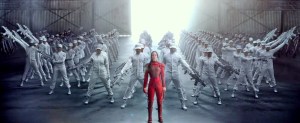 War inevitably results in collateral damage. Legs, arms, minds, whole lives forfeited while the opposition resets and plans next moves. Desperate times force characters to choose allegiances, values, alliances. Gamemakers reset within the city walls. None are safe. The victor hero and spokesperson, Katniss Everdeen, remains the ugly-crying face of the rebellion carrying her personal vendetta against President Snow up the steps of the Capitol. Leading rebels in civil war proves more difficult post Peeta’s mind meld with Snow. Battle rages. Mine fields are set. With every step, detonation or success?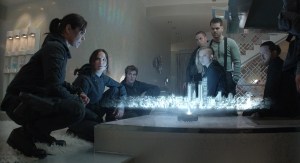
 No more showstopping costumes aflame, no more fake romance drama and lies, no more appeasing the Capitol viewers in the old ways. Or so they think. All is televised, all is heresay and henchmen. Faceless guards rack up the body count while Districts unite to attack one final time.
 It’s all difficult to watch. I struggle through war films, question everything. I wonder, when do we audience members become like the Capitol? When does a well made film turn viewer into voyeur?
 Katniss defends. She has killed, but is she a killer? Motives muddle. Pressure mounts and armies assemble. When is a single life expendable? In war, do the rules of morality change? When do soldiers forget that war is not a game?
 Some would say these are just movies. Action and sci-fi adventure. Drama and a nice blend of peace and romance amidst explosions and chaos. In my opinion, these are not simply films. They are not made for entertainment alone. They cannot be. They are perhaps cautionary tales. Story and history mimic and repeat, ebb and flow. We pray the world will never repeat in history this story of Panem.
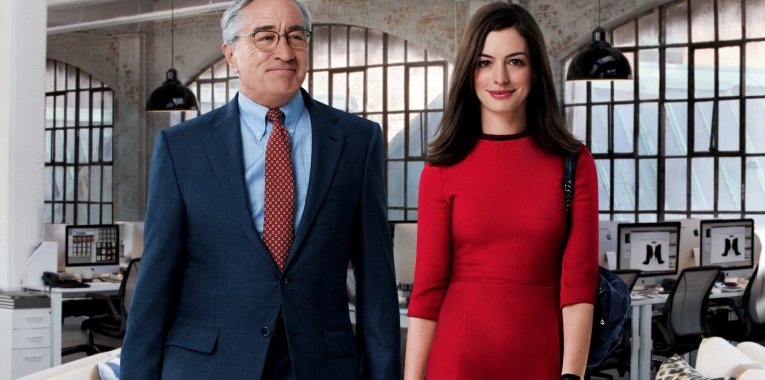
 Anne Hathaway, I am convinced, is Shakespeare’s vampire-bitten wife by the same name, ageless and continually remaking Princess Diaries and the Devil Wears Prada. She’s finally made it as her own boss in this one, and she is determined to show that she can run a company all by herself without becoming a hateful, bitter, or too busy to have a family.
  This film promotes the positive business model of improving a work-life balance. It examines the pitfalls of start-ups, the benefit of experienced voices in the workplace, and the process of mentoring. Obvious from the previews, it’s an anti-agism play, but DeNiro rises as the professional for his kindness, his offering of time, his gracious attitude, and his personal initiative. He alone proves that gentlemen do exist and pocket squares are proof. The office falls for him, and his reward is helping each co-worker find success. If that were every worker’s personal motto, the face of business would be changed. Seeing this on the heels of Steve Jobs (2015) proved a fascinating study on growing businesses, sharing ideas, and becoming a business leader. Where Jobs repulsed, DeNiro wooed.
  The Intern, which feels a great deal like an attempted sequel to The Internship (2013) is full of Home Alone hyjinx and freshmen boys bathroom humor. Not enough to be sorry I saw it, but enough to never really need to see it again.
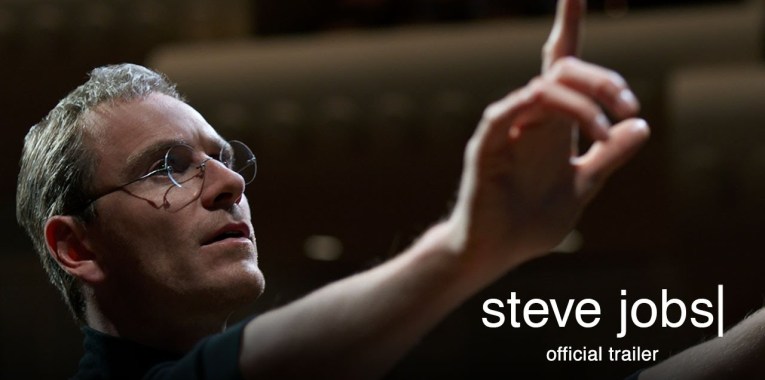
 If you’ve watched The West Wing or The Newsroom, you’ve already taken a class in “sorkinese.” Aaron Sorkin writes with poignant, often profane cutting banter but has an uncanny ability to allow great actors to shine and the characters they play to remain flawed but incredibly likable.
 Fassbender is to Jobs as Reeves was to Superman. Put on the turtleneck and white tennis shoes and away he goes.
  Meanwhile, Kate Winslet’s sweeps the rest of the audience in under her protective umbrella to watch the rest of the performance. She is caretaker and necessary foil to Jobs’s hero.
 Sorkin weaves fictional story plots into true history with provocative threads of conversation. He builds an intricate spiderweb of verbal sparring between those closest to Steve Jobs, whose pride and potential trap him in the center of the web. The illusive enemy and savior become one as iNnovation thrusts the world forward simultaneously cutting friendly and familial ties. His own daughter is among the collateral casualties.
  Jobs conducts the creation and release of the future of personal computing while his orchestra of brilliant tech and financial wizards play in the pit. They all must play the roles they are given, but without the sacrifice and leadership of the front man, all would be lost. Jobs sees this. It takes a strong, driven leader with unparalleled focus to make history like he did. The question posed, as always, is: is it worth it at the expense of relationships. Must genius doom itself to solitude?
 As films go, this one haunts. The Tron-esque pulsing score matches the blood pressure of the film’s namesake.
  Danny Boyle, the director, uses people as props and lighting as sets, playing on the algorithms and symmetry of people on the move, of friendly connections severed, of puzzle pieces placed over decades as industry stretches forward to match the dreams of innovators.



 This film is a giant leap for outer space storytelling after many films that take only small laborious steps from one malfunction to the next. This film achieves the same survival efforts but perks up the pace by blending them with upbeat attitudes and humor, a boost for math and science education, and a swell of hope.
 We wonder if we’d make it. On the reality tv series Survivor, it’s more about interconnectivity and socio-relational survival. You’ve gotta win the trust of the right people. Our Martian is all alone but can somehow function, create, self-motivate, and build. Fortunately he is vlogging, or video journaling, instead of talking to a volleyball. There is a countdown, rationing, always a next step.
 Then the supporting cast gets to work. The future NASA as it is presented, looks feasible as they pull an Apollo 13 by pooling their efforts and collective genius. Jeff Daniels, Kristen Wiig, Donald Glover, Jessica Chastain…the list goes on. It’s a beautiful cast on a film worth seeing.
 Damon’s character Watney sees problems as opportunities. He strategizes and builds, sets deadlines and works hard to meet them. In his own quirky way, he says goodbye to every little thing, thanking storage bins and chairs for helping him make it each day.
  Gratefulness goes a long way. And whether he survives or not, you feel, as he does, simply thankful for each day, each sunrise, each plant, each breath.
 The message of this film is clear: life is precious and worth fighting, striving, creating, growing, learning, laughing, surviving for. Don’t miss it, any of it.

 Splatter: on FILM